Archive | December, 2011

Day 88 of 96 – I must be about five days behind in my blogging.

17 Dec

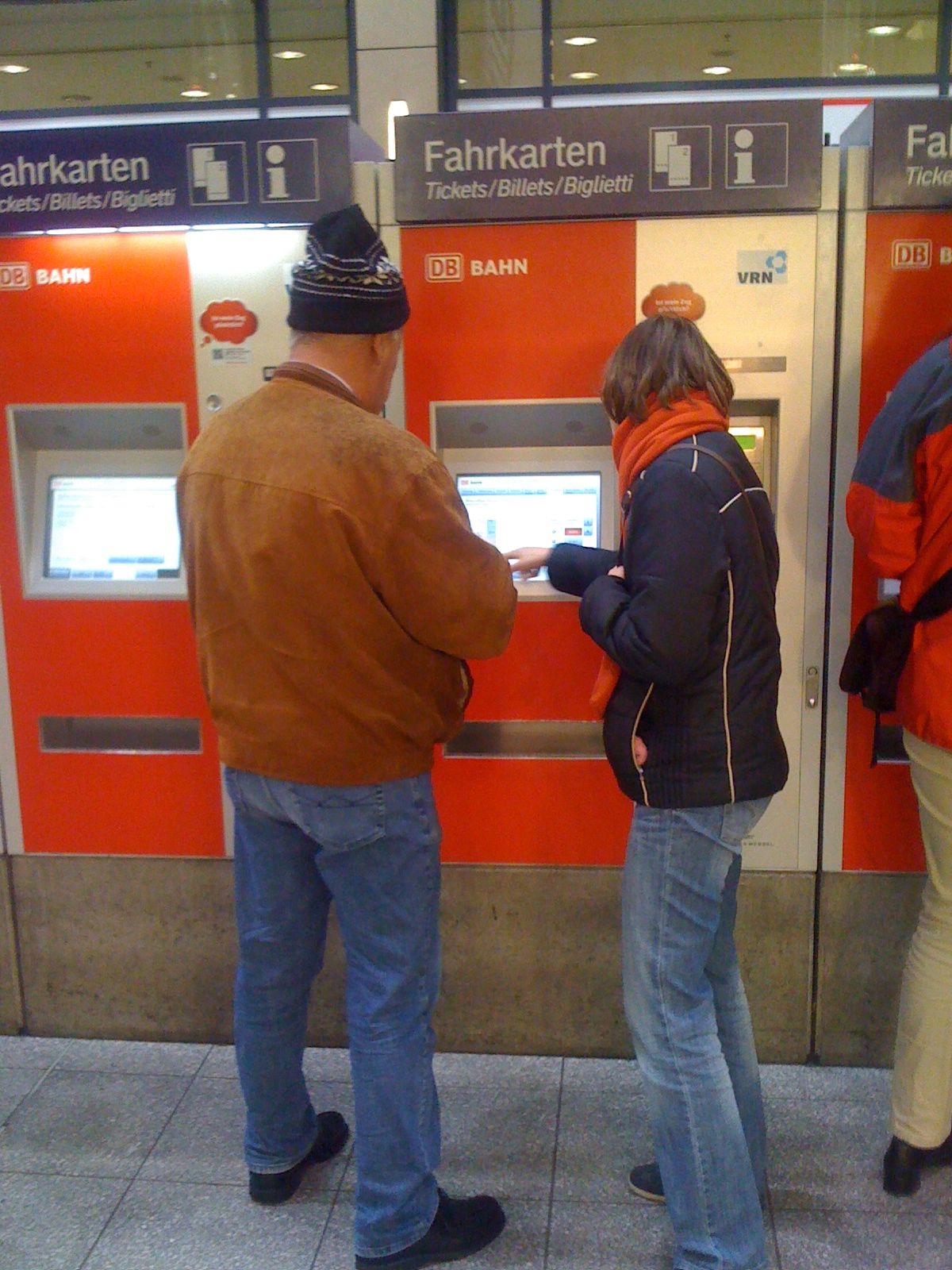
I blame the jigsaw puzzles. But I’ve also been traveling. Recently I went out to the west of Germany to see some friends. It was a very successful trip; I managed to visit with eleven different humans. Deutsche Bahn was very helpful too. I love traveling by train. Civilized.

During this trip I got to visit with two couples (that’s four people) and what’s special about all this is: I was the one that introduced them to each other (not the couples to each other but each member of the couple to the other member).

And the bake sale to raise money for the carwash has been cancelled because of confusion.

Note: Due to privacy concerns I’m going to simply call them Couple A and Couple B. I don’t mind posting my shenanigans all over the Internet but I try to keep the exposure of everyone else to a minimum.

Couple A were introduced to each other when I visited New Zealand in October 2005. He was a friend from when we worked at Nortel and she was one of my German friends from the GI in Ottawa. They were both living in Auckland and I was in Australia for work, so I figured I’d drop by and say hello.

Couple B were both friends from Ottawa. He was from out east, working in the nation’s capital and she was from the Netherlands on a two-year contract. I think it was April 2006 when they met.

Note: English is a confusing language. If I’m telling a story and I say “he was a friend from Ottawa” this could be interpreted as “he was a friend” as in “we are no longer friends”. What I mean to say “he was a friend from Ottawa and we are still friends to this day”. I’m going to just keep everything in the past tense for my own sanity.

So Couple B got married in April in the Netherlands (civil ceremony) of which I was able to participate. They had a second proper wedding with family in Iceland in June. And they had a baby born in September of this year.

Couple A got married in Germany at the beginning of July and this was followed by a second wedding in Canada in October. And they are going to have a baby in January sometime.

There’s some crazy parallels here.

and apparently multiple weddings are all the rage these days.

What gets my mind racing about all this, is that I’m responsible for these babies existing. Well, maybe “responsible” is not the right word. Let’s try: without me these exact babies do not exist. I think that’s pretty cool. I’ve helped contribute to the success of the project while having done the absolute minimum amount of work.

And because they all live in Europe I won’t get to see them very often, but the kids will always remember me. Their parents will tell them, “This is our friend Jason. He introduced us to each other”. Kids are pretty smart. Once they’re a few years old they’ll come to the realization that if a time-traveling robot from the future wanted to prevent their birth, I would be a legitimate target for that robot.

That’s some built-in respect right there.

Respect.

Day 87 of 96 – More toilets

17 Dec

So it’s crunch time for toilet transportation. I’ve got visitors coming this weekend and I’m leaving on Tuesday. This does not leave much time to get my toilets in order. This morning I woke up just before noon. After a quick shower I packed my gear and was on my way to the Obi to get me my German toilet. My plan was thus

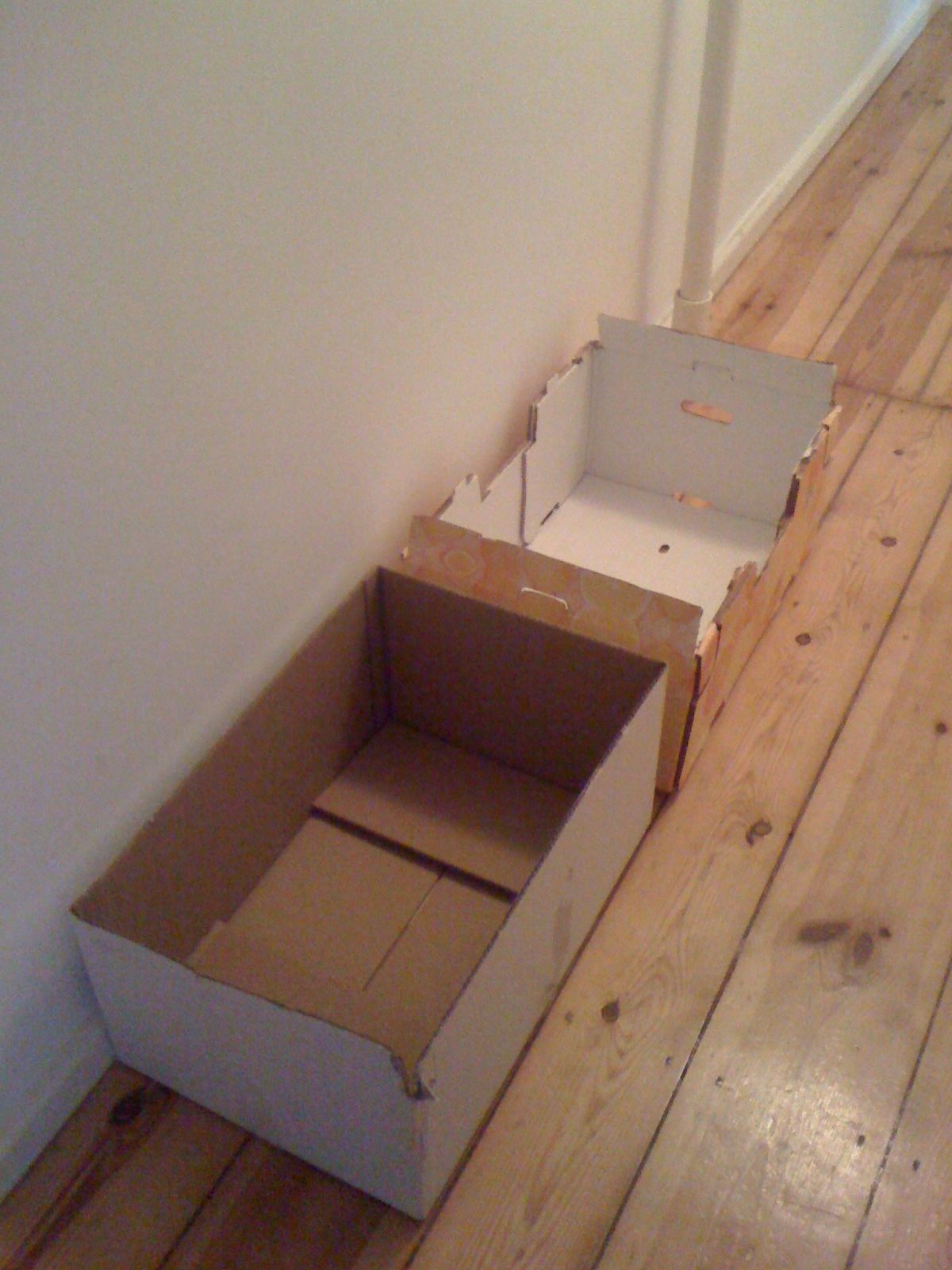
  1. with these boxes I got from the supermarket
  2. take the tram to the Obi – walk one hundred metres to the M10, change at Landsberger Allee, jump on the M4, then walk to the Obi (also one hundred metres).
  3. pick up the toilet, make sure the boxes fit, buy some tape, bring everything back home (in the reverse of step two)
  4. pack it up good and tight
  5. walk it over to the DHL store – about three minutes toiletless walk from my place, maybe four with
  6. ship toilet

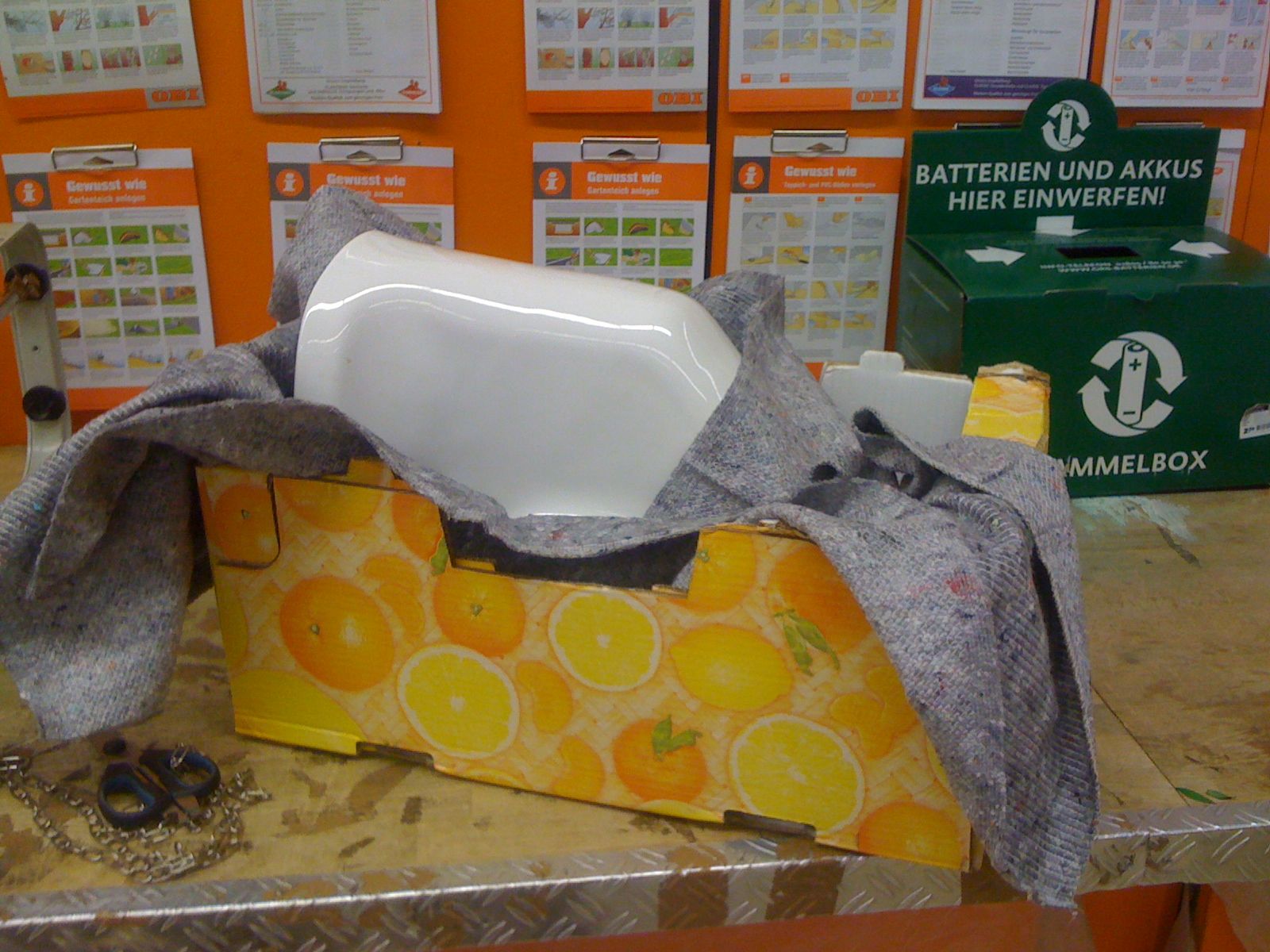
Boxes, top and bottom

Today was a lesson in adaptability. Things did not go according to plan.

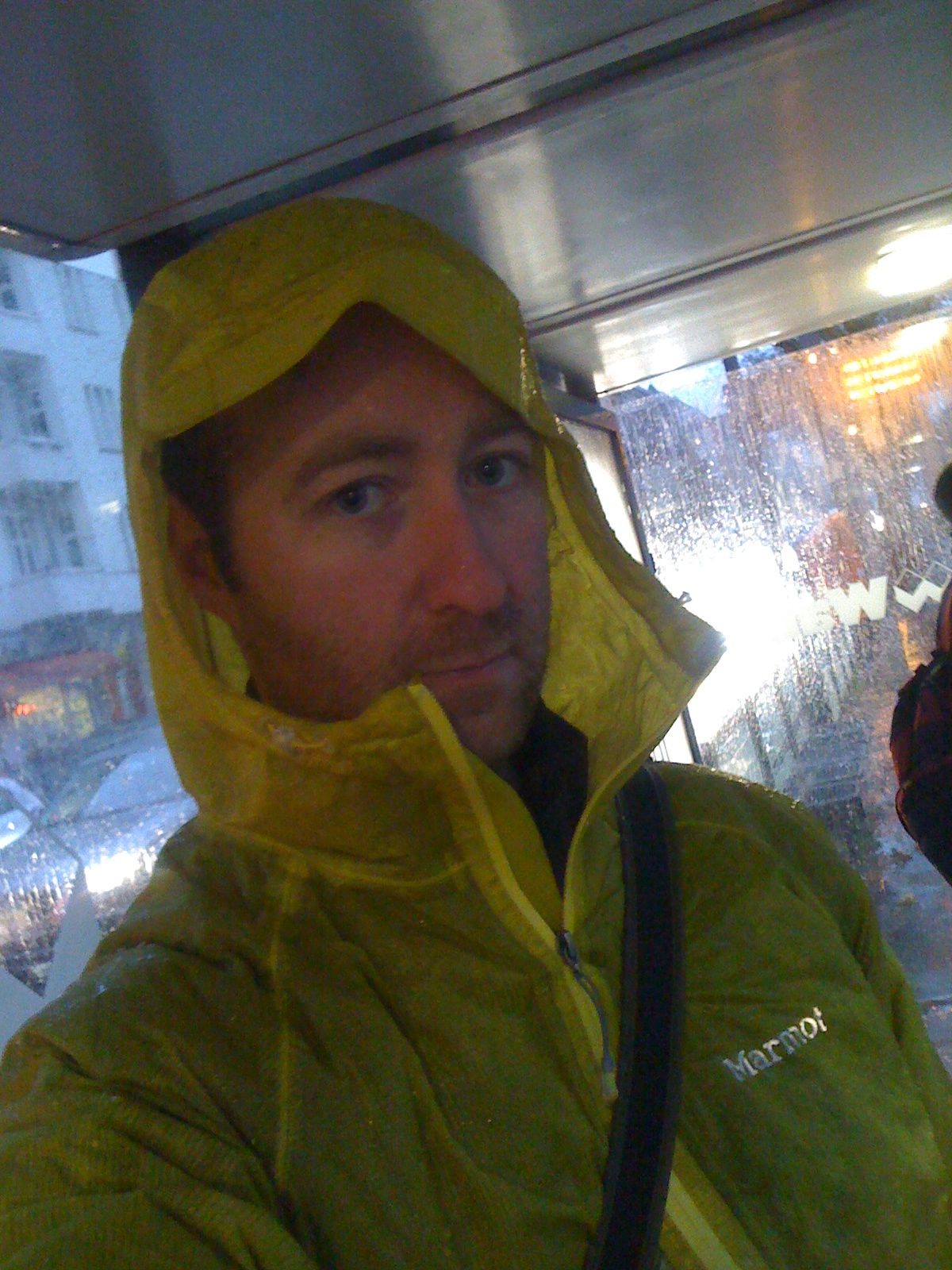
1. it was snow raining the whole day. I’ve been in country for over three months and it’s rained only five time. Today was the worst. I wanted to do this around noon when the trams would be less busy. With the crappy weather, everyone was packed into the streetcars – no one wants to bike on a day like today. Too dangerous.

Rain

2. I got to the Obi and there was a DHL guy making some deliveries. I asked him if there was a depot location close by. I thought that maybe I could do the whole thing right there. He told me there’s one that was a five-minute walk away. Nice.

3. I thought of first buying the toilet and then going searching for the DHL store but that seemed much worse than doing a sortie to map out the distances. The weather was really miserable and I wanted to minimize my time outside. My getting lost carrying a toilet around the streets of Berlin would make a great blog post, but not today.

4. DHL store was two hundred and sixty paces from the Obi – right where the guy said it was – about a five-minute walk. They only take cash so I had to find a bank machine. There’s also a weight restriction of twenty kilograms or the price jumps a lot closer to the why-are-you-doing-this-to-save-five-dollars category. I did a practice run last week and bathroom scale from the store said fifteen.

5. Cash acquired, I made my way back to the Obi. I found some duct tape – eleven euros – what a rip off. The same thing in Canada would have been less than five. I also got a blanket for three euros – protect the toilet!

6. I tested it out and the the boxes fit. Next, I bought all the stuff – total cost is only forty-two euros.

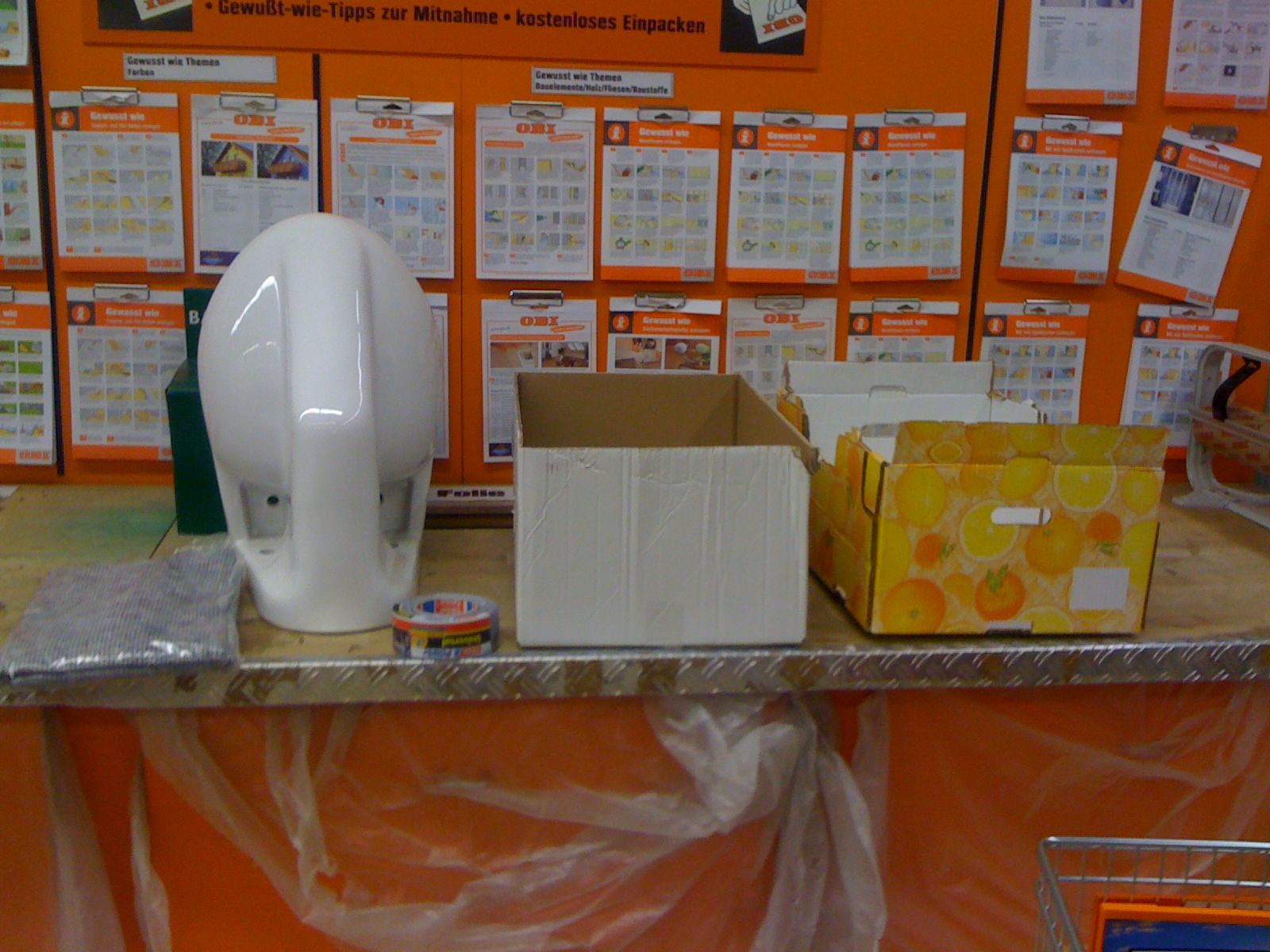
7. At the Obi just after the checkout they have a station where people can pack up the toilets they want to ship to Canada. I took full advantage of this service.

The pack station and the gear.

8. It took about ten minutes to wrap everything up.

Blanket

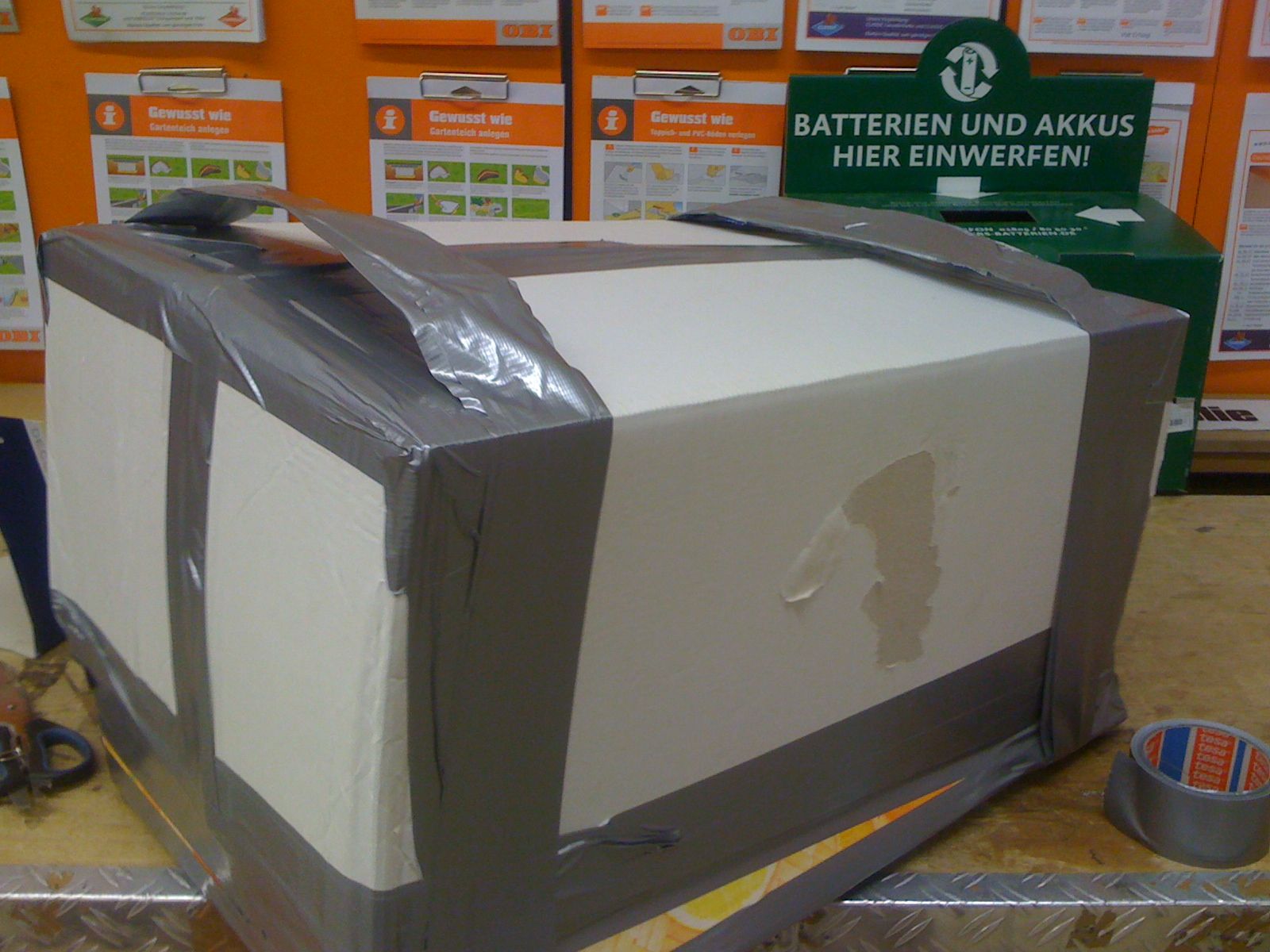
Lots of tape.

9. The finishing touch was to add a couple of handles to make transportation a little easier. Man I hope this thing is not broken when it gets to Ottawa.

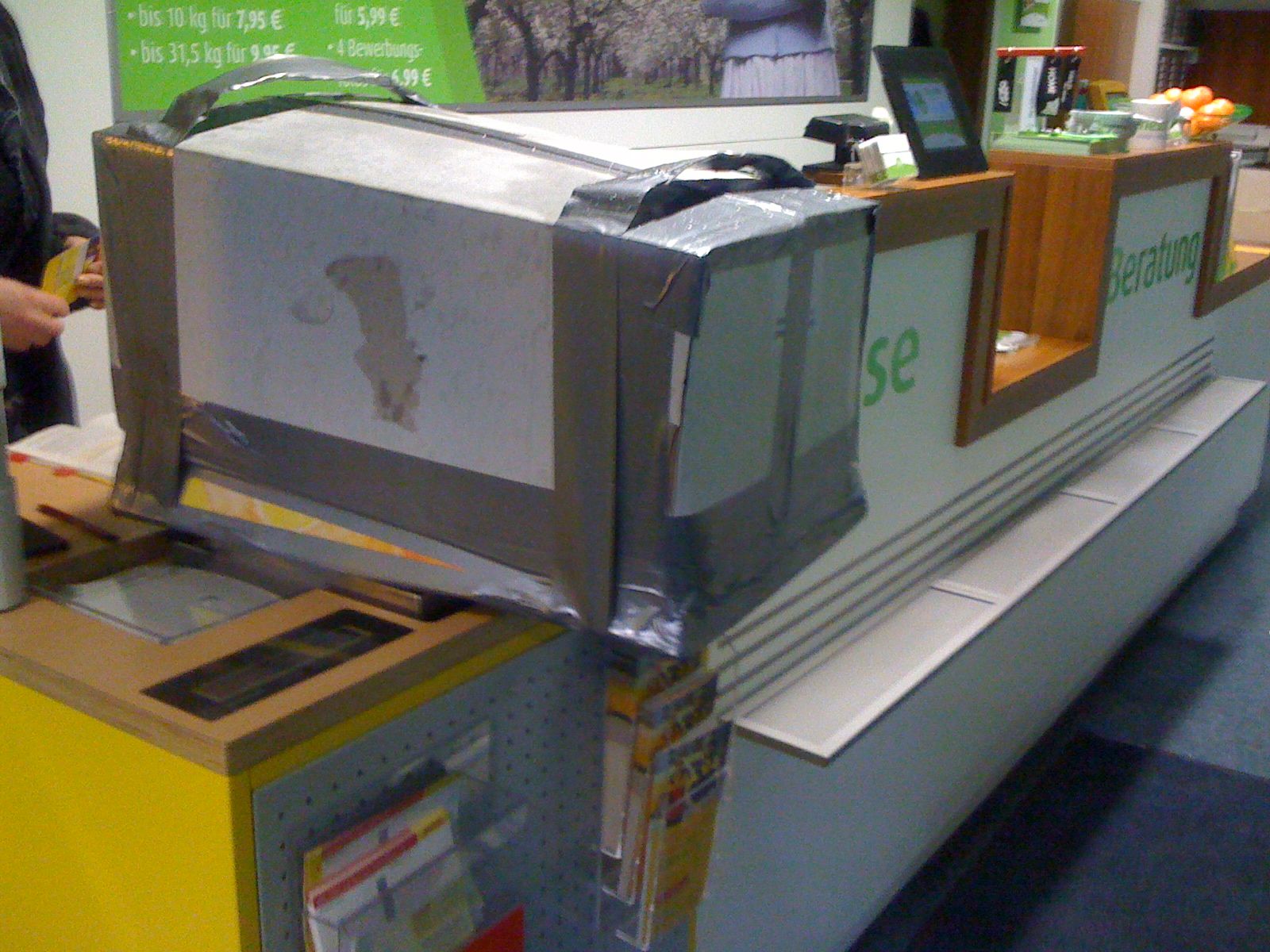
What's your handle, good buddy?

10. The walk to the DHL store was without incident. It was snow-raining even harder and I was worried that the toilet will be damaged by the water.

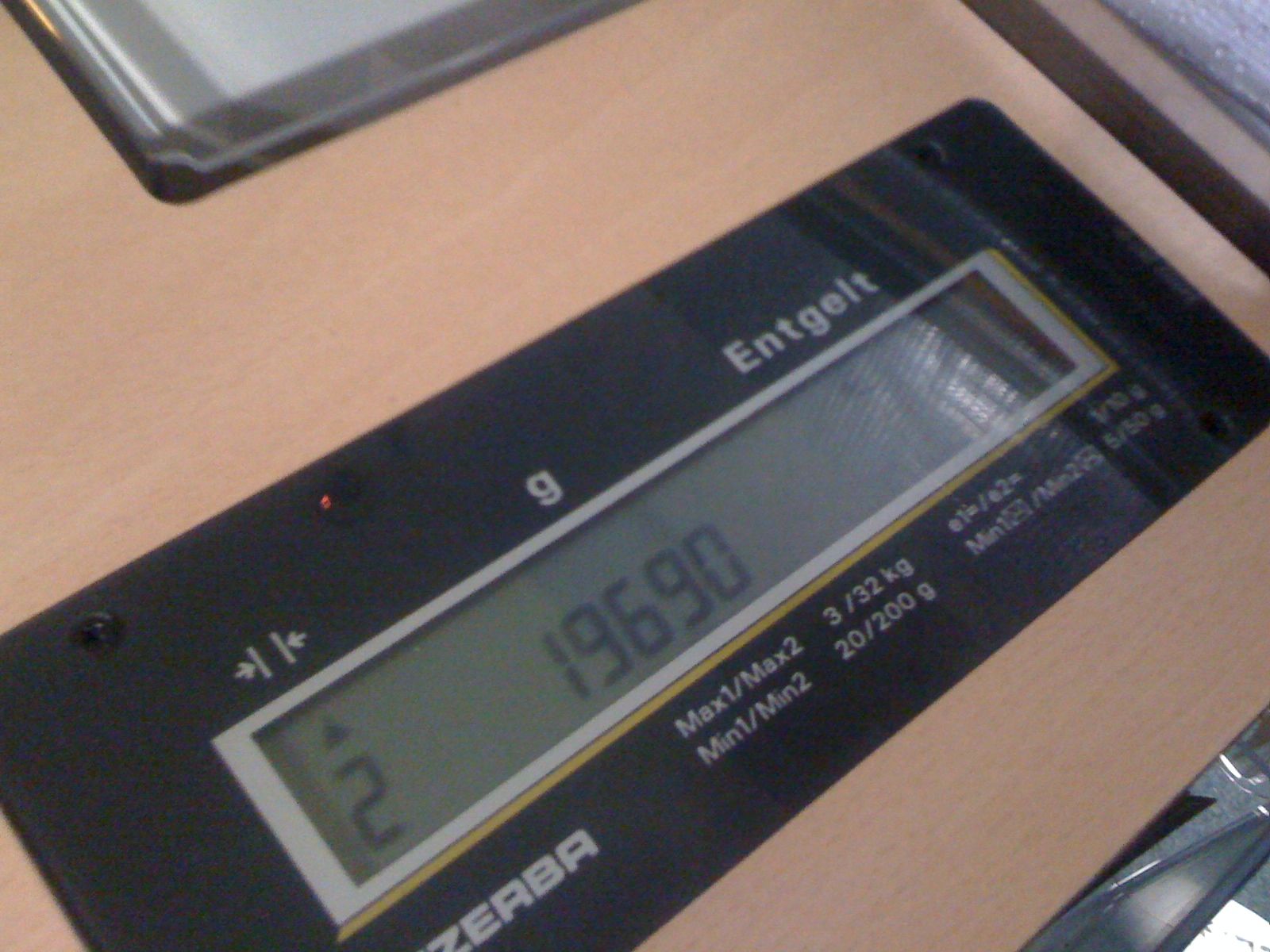
11. At the store the clerks were pretty humourless. That is until I told them what was in the box (they asked if it contained any explosives or firearms). We weighed the package and it came in at….

The scale!

That was close / 1969, what a good year.

12. I filled out the appropriate paperwork and the toilet was sent on its way. Sixty-eight euros for shipping.

Total non-recoverable cost:

68 shipping
28 toilet
8 duct tape
————-
104 Euros.

Exchange-rate wise I did well by waiting until late to do this. Compared to the Loonie, right now the Euro is in the toilet (pun intend).

Let’s see how this turns out. Next up – windows!

Day 86 of 96 – Do you want to have your mind to be blown?

16 Dec

Then read on!

So during my visit to Leipzig I happened upon one of those medieval Christmas Markets you’ve heard so much about. It was about 13:00 and I had not eaten anything since about 17:00 the previous day. Needless to say I was hungry. It was a beautiful day, picture perfect if you will. I was upset that I had decided against bringing my sunglasses (why bother, it’s almost Christmas) but at the same time I was delighted that I needed them (was a beautiful sunny day). I wandered about the different booths, stalls, huts, and yurts searching for the one great meal to fill my tummy. I mean stomach. Gut. Crap factory.

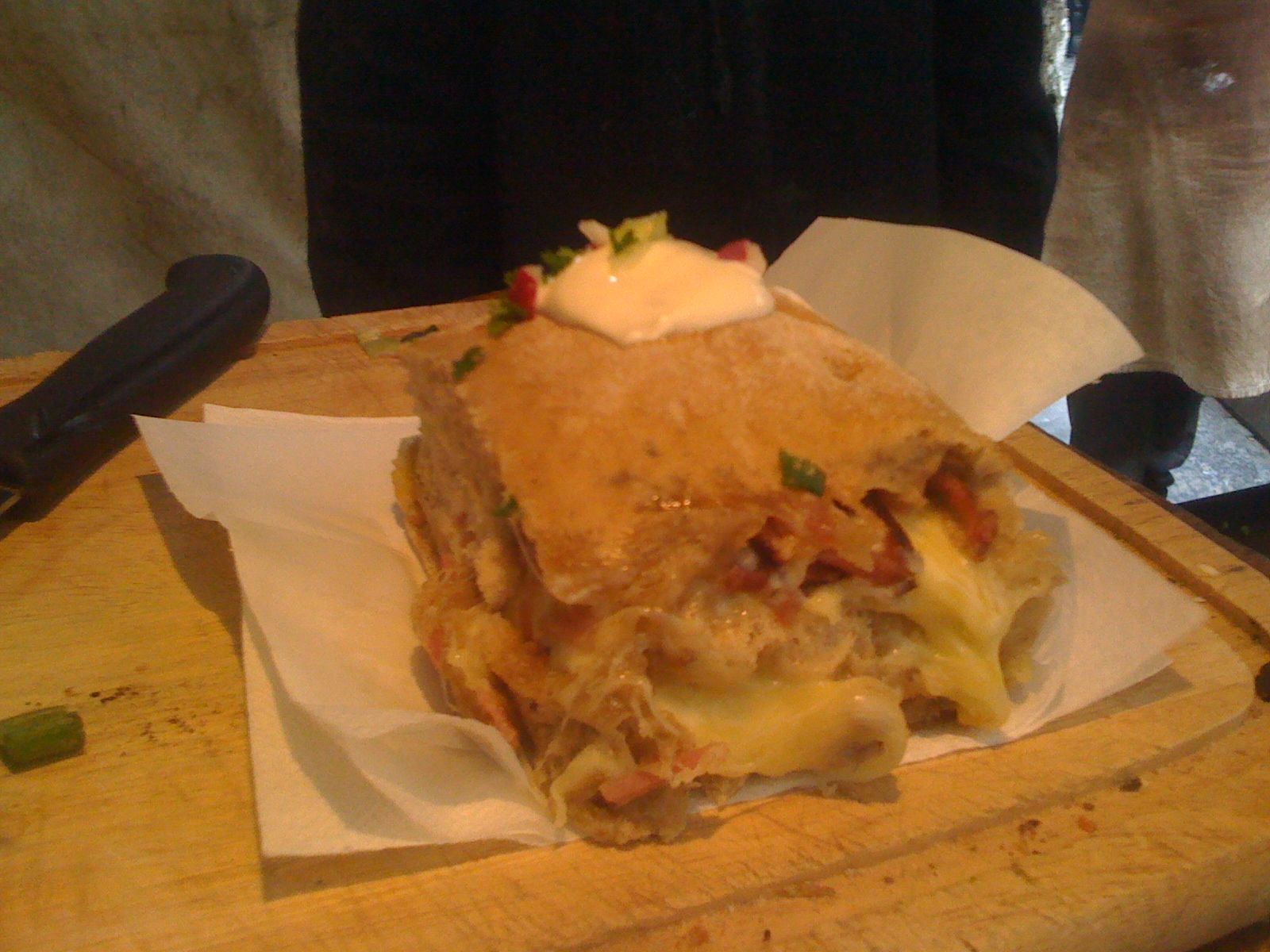
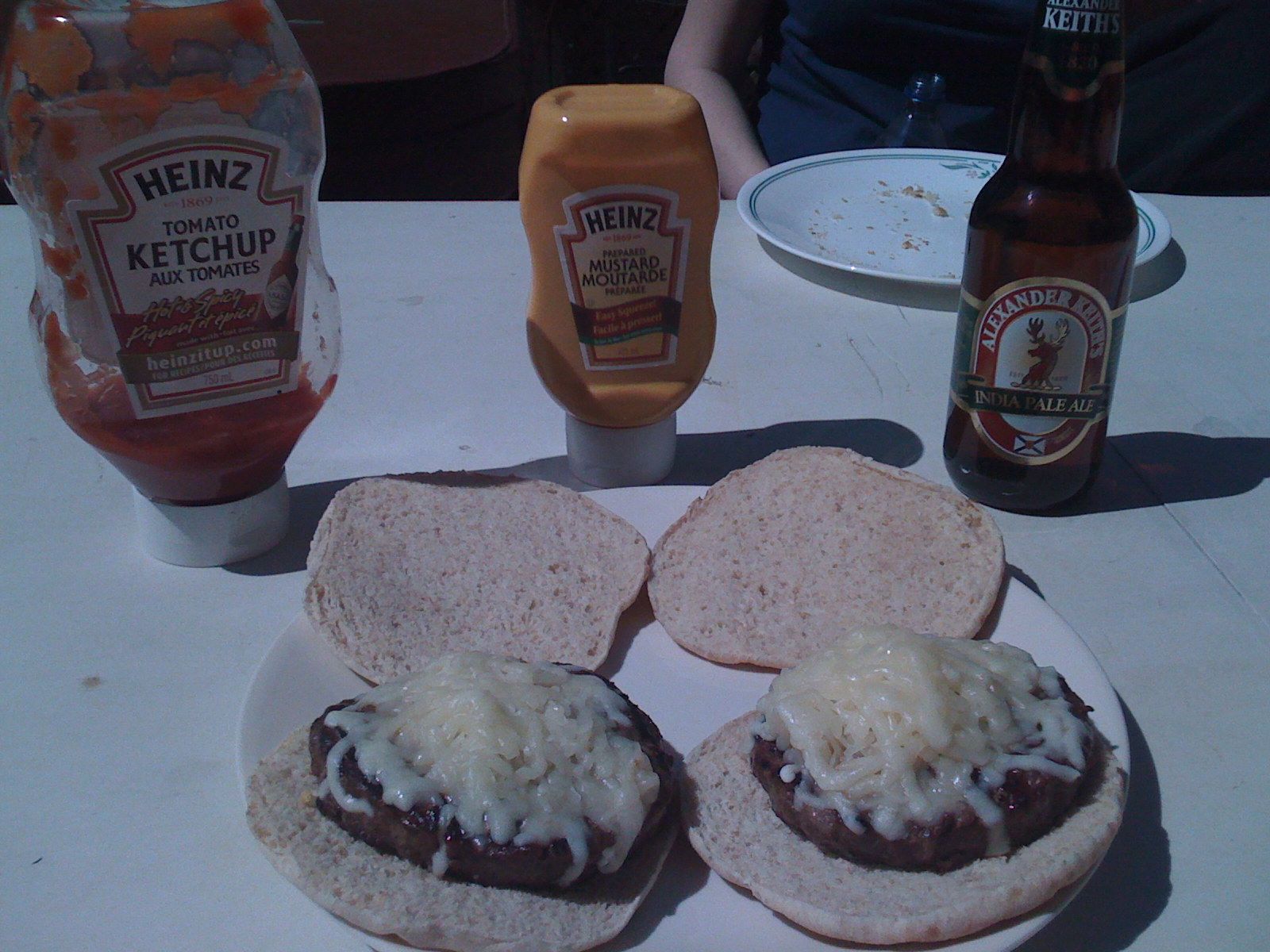
Anyway, I noticed that one of the businesses had quite a large number of people partaking in the eating of the food that was being sold by this business. I had never seen anything like it before. It was bread, with cheese and bacon. Here’s a picture for your eyes.

Ever

I was sold. Lots of people were buying and it looked delicious. What more does one need in making a decision of this magnitude? I found a beer, purchased one of the ham-bread-cheese things and it was the greatest day of my life.

The people working at the booth noticed my inability to formulate even the simplest, grammatically correct German sentence and asked me where I was from. Turns out that both of the employees I ended up talking to had spent many months in Canada.

Did you know that out west Taco Bell is called Taco Time? Well neither did I.

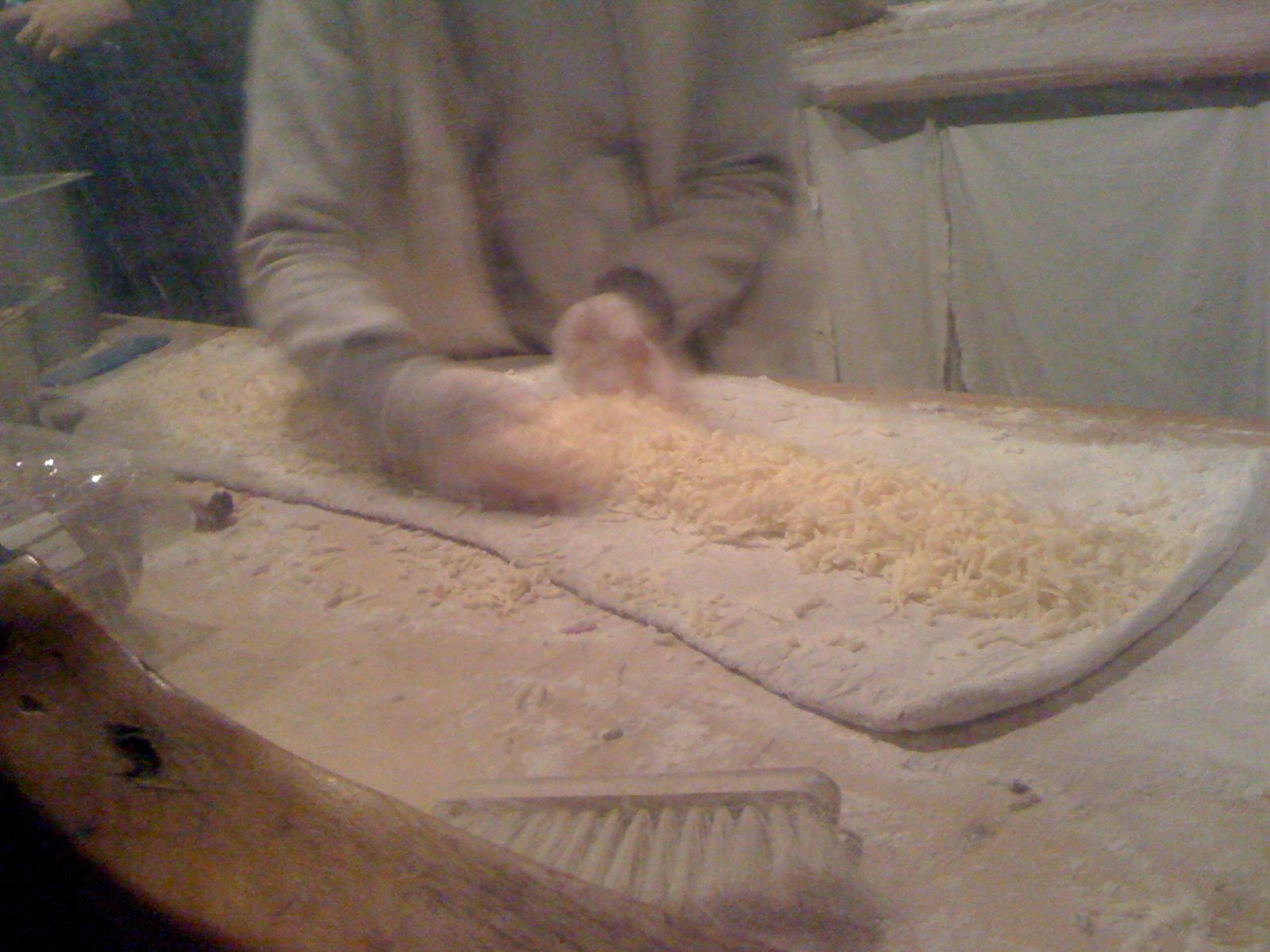
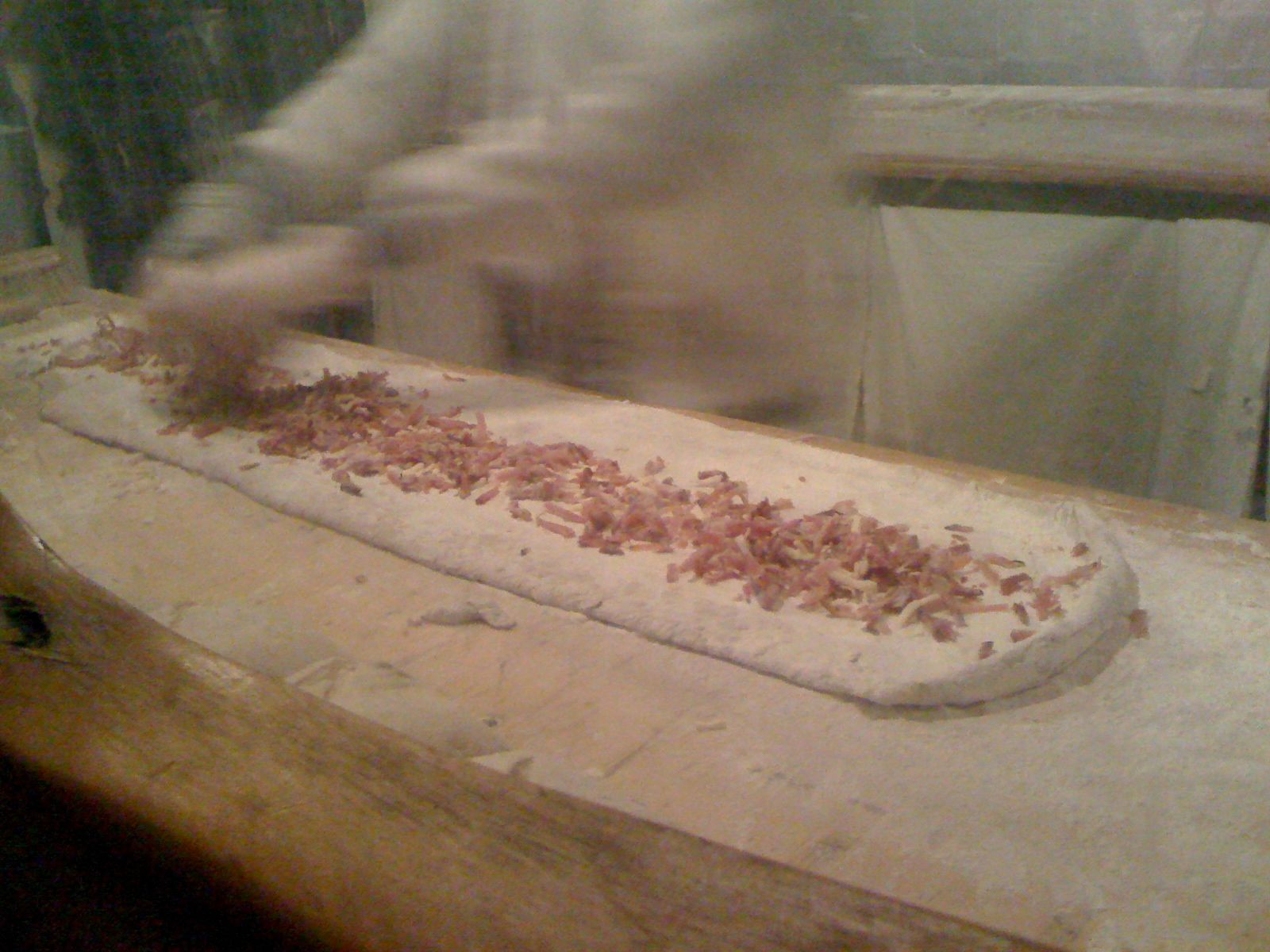
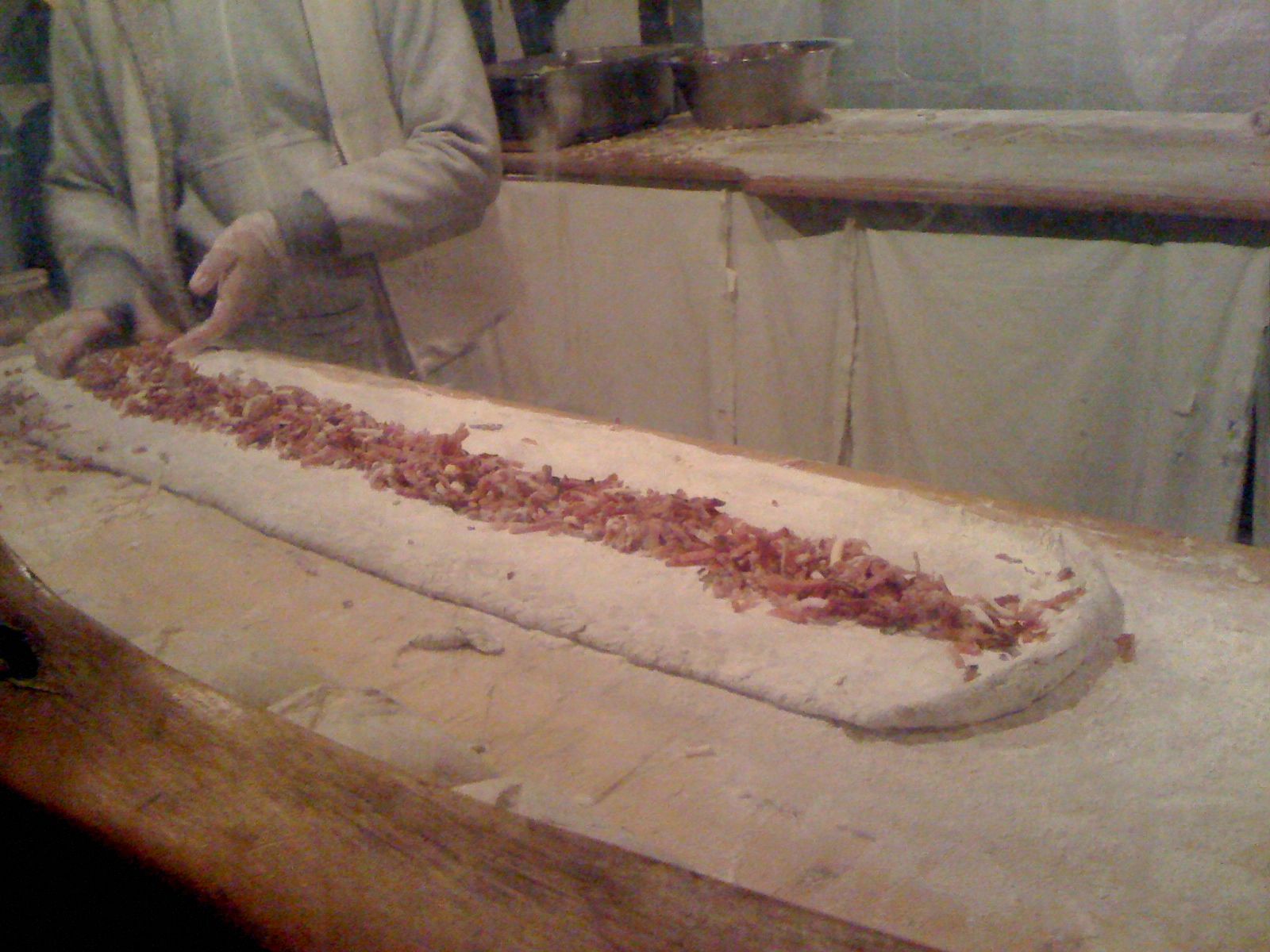
Their English being excellent, I spent the next hour getting as much information as I possibly could about these ham-bread-cheese things. I know a winning idea when I see one that’s demonstrably doing better than all the similar ideas that are surrounding it. I could probably write about twenty-five hundred words about this but I’m late as it is. To speed things up I’m going to replace words with pictures and point form.

– the ham-bread-cheese things are made and baked on site
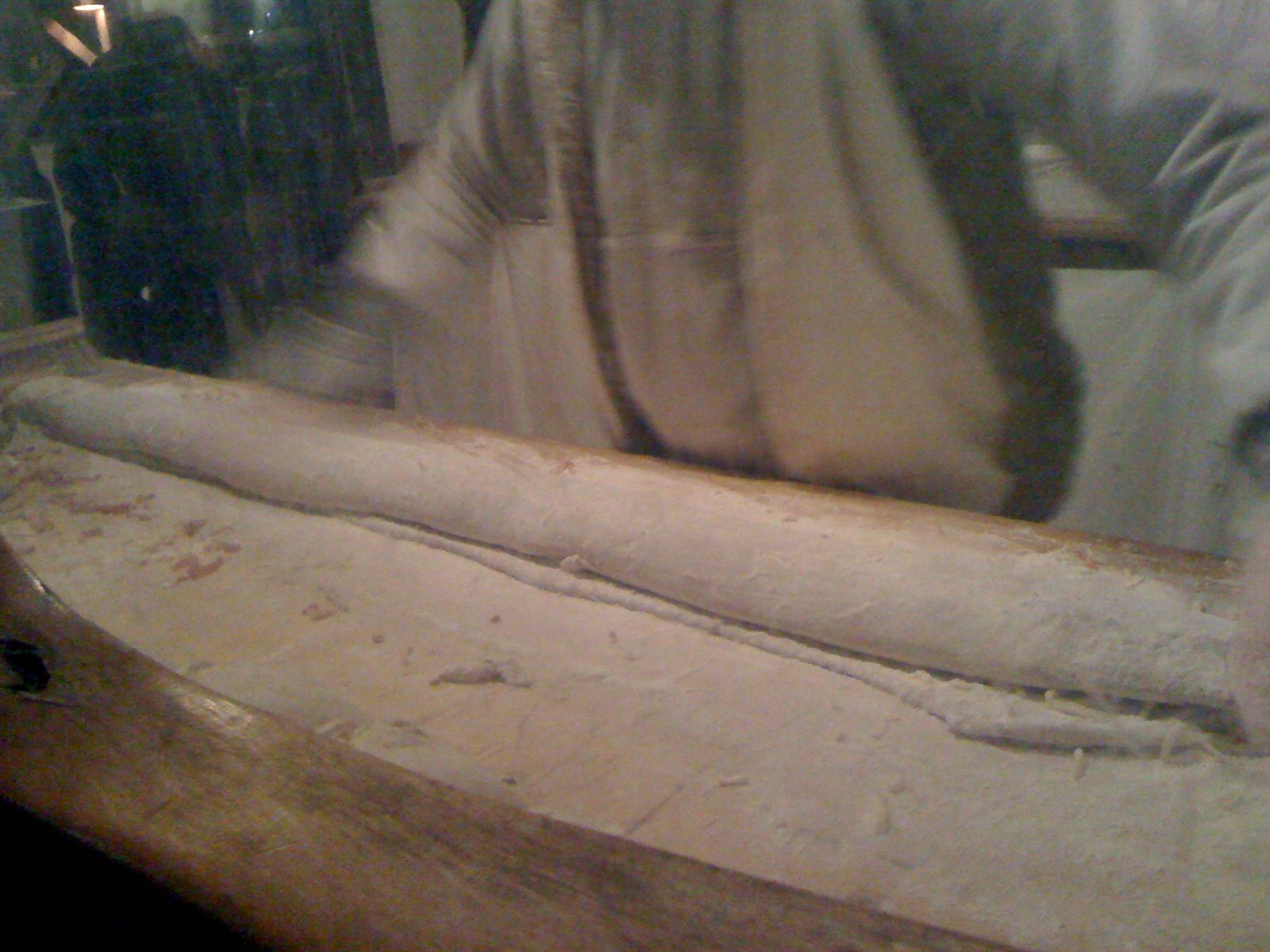
– one employee makes the dough

Making the dough...

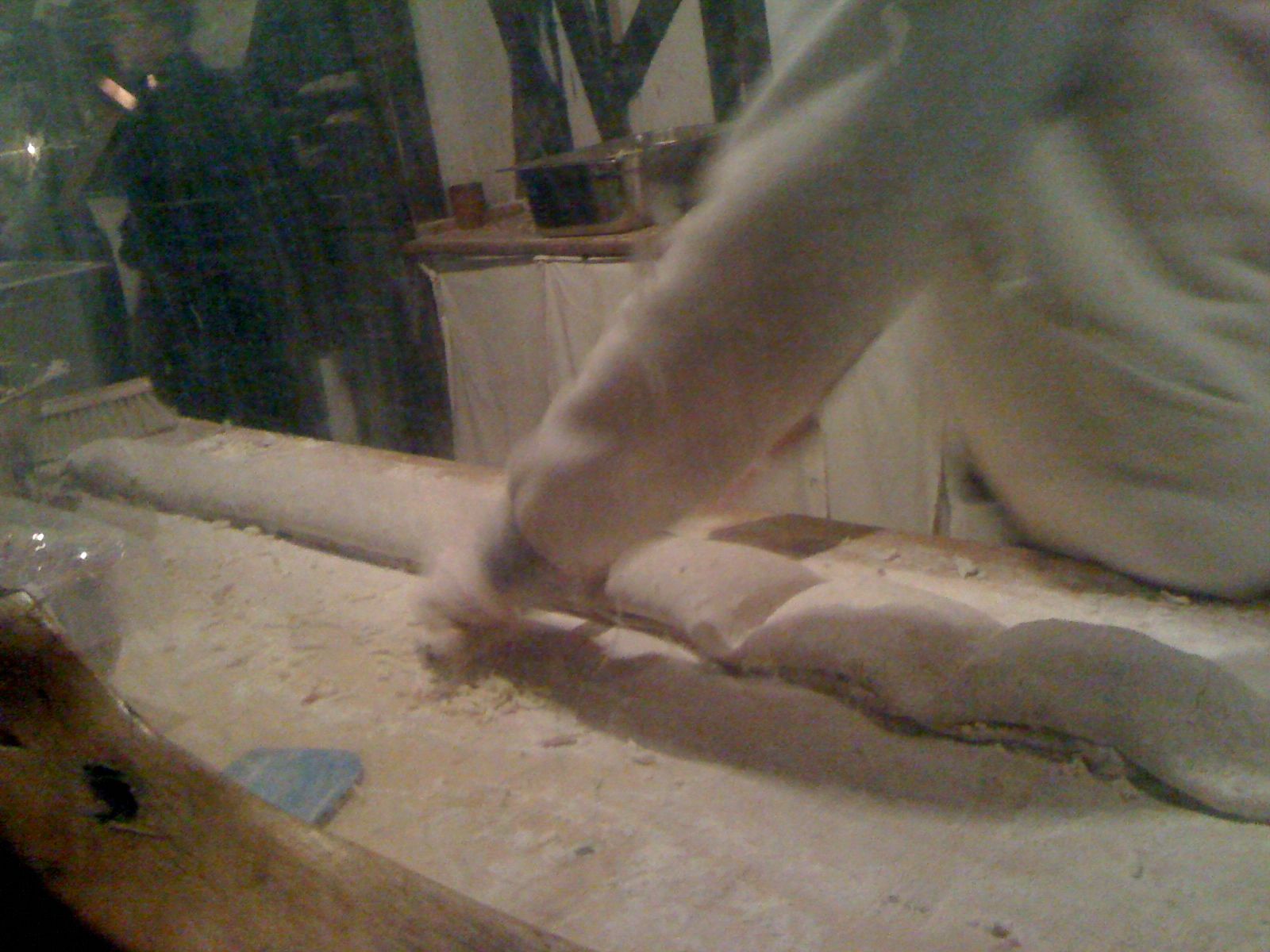
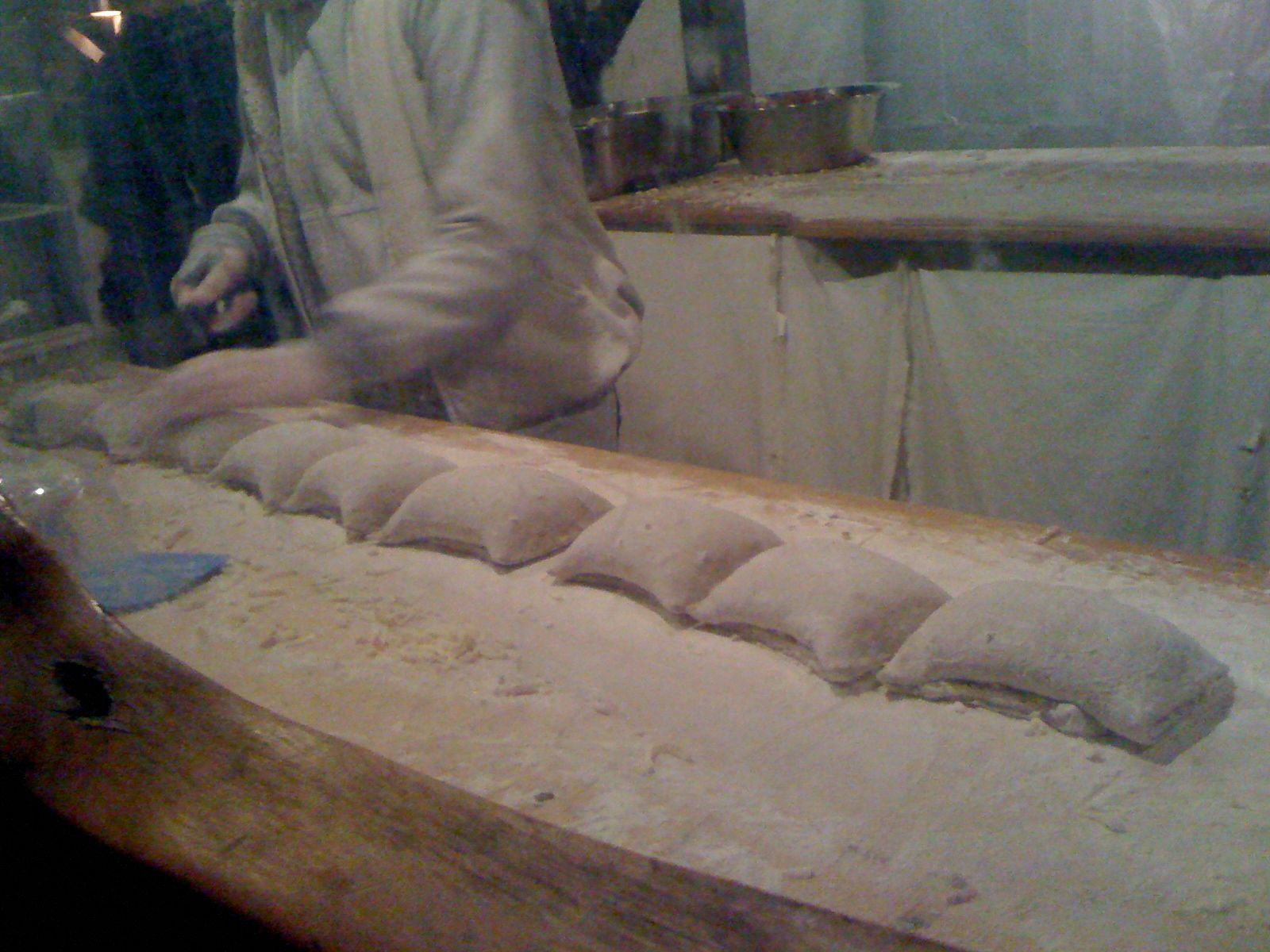
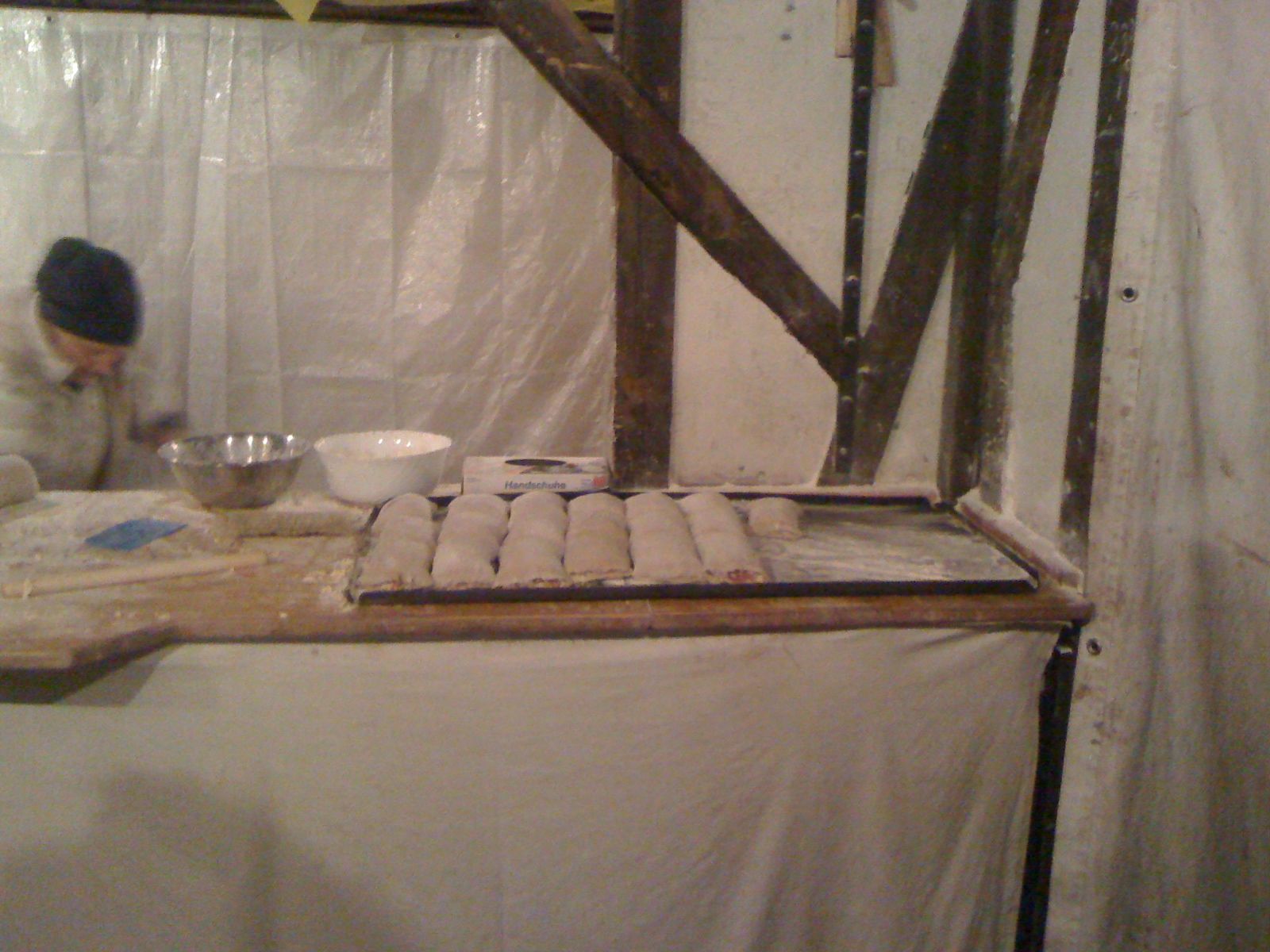
– another employee puts everything together (the dough, cheese, ham) and places the assembled merchandise on the tray

One

Two

Three

Four

Five

Six

Seven

Eight

Nine

– two employees are selling
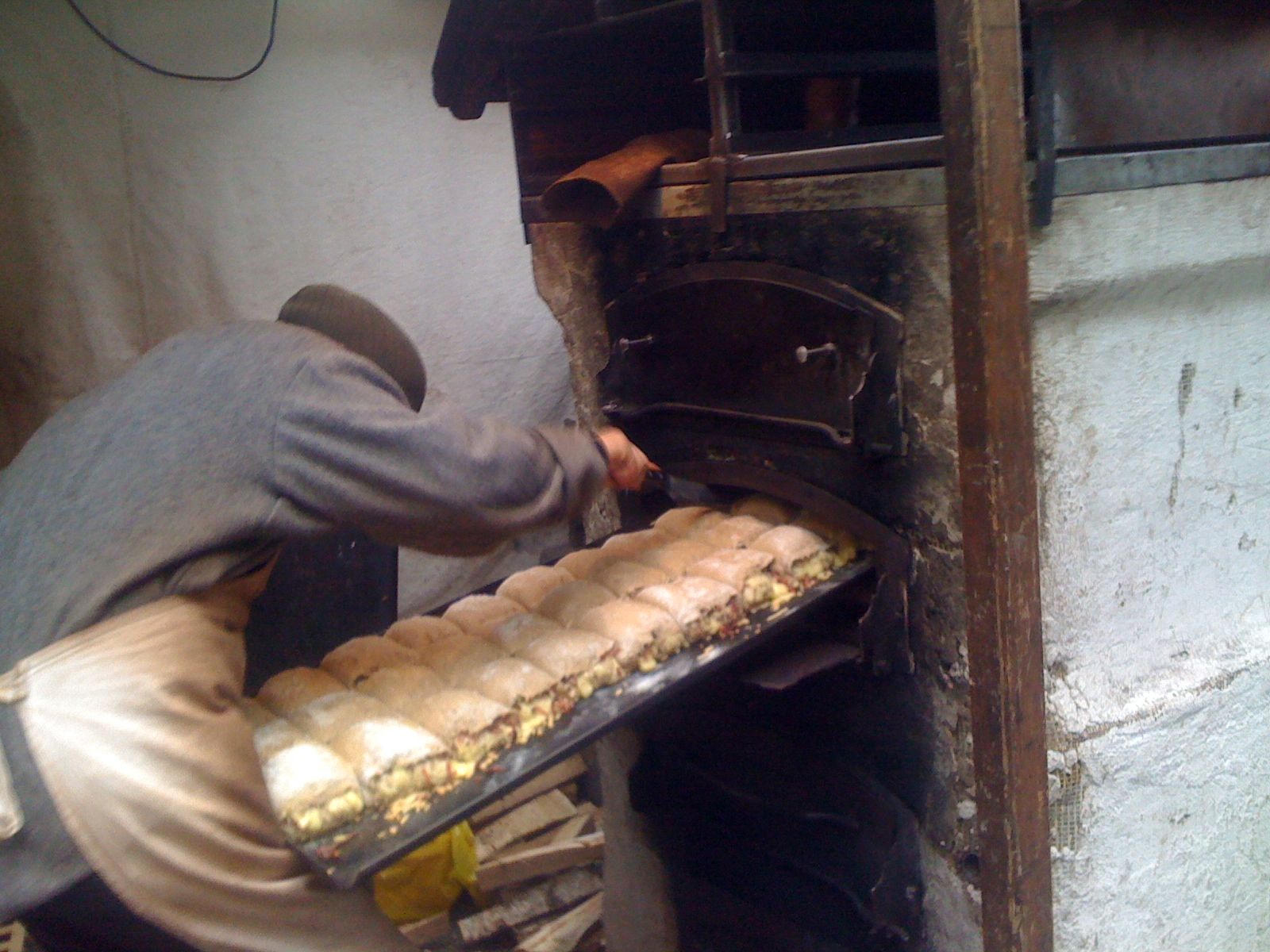
– one is working the oven

Into the oven

– there are about thirty per tray
– 10% of the ham-bread-cheese things are made meatless
– the meatless ones have an X carved into the top of the bread to distinguish them from the non-meatless ones
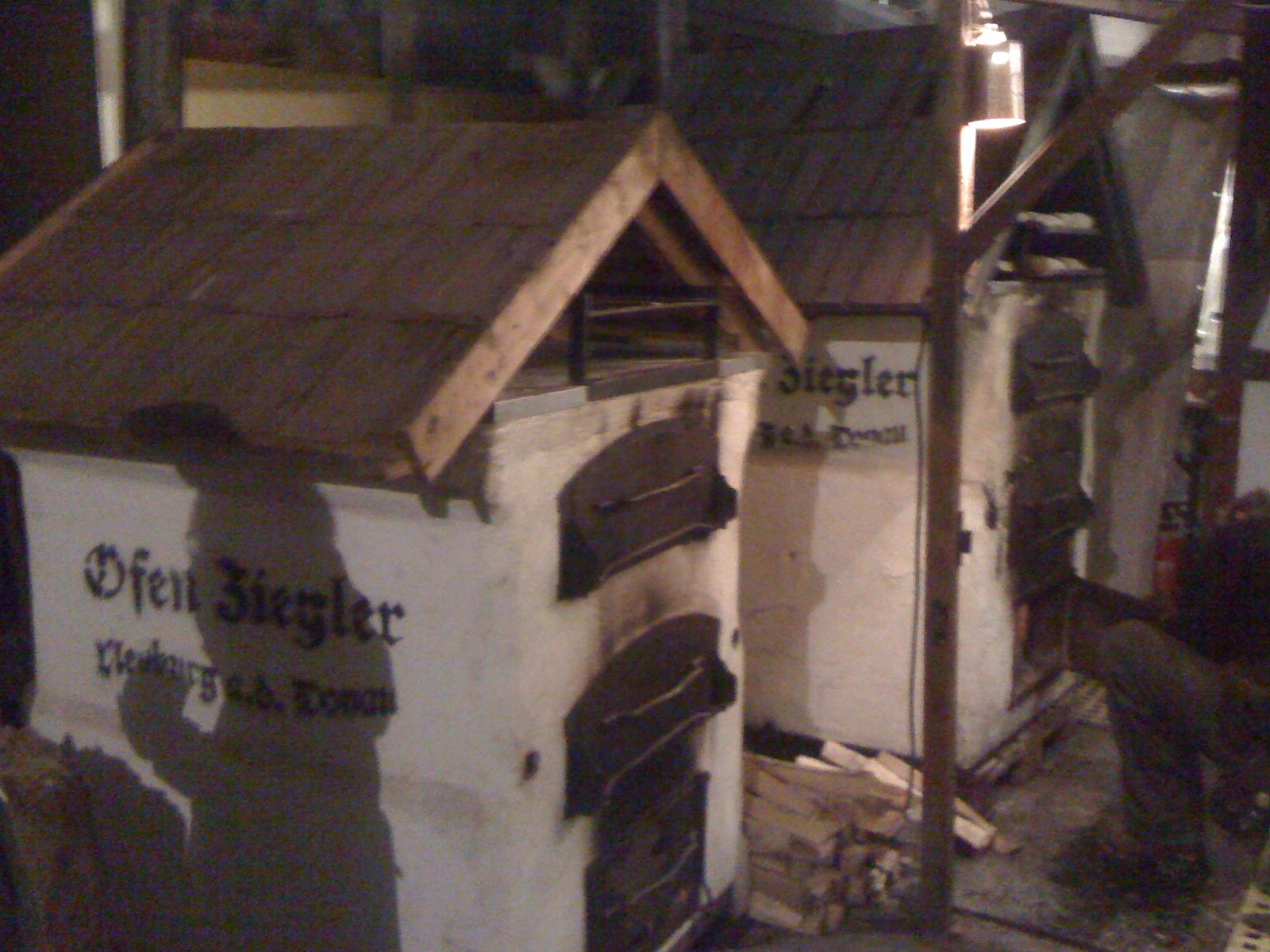
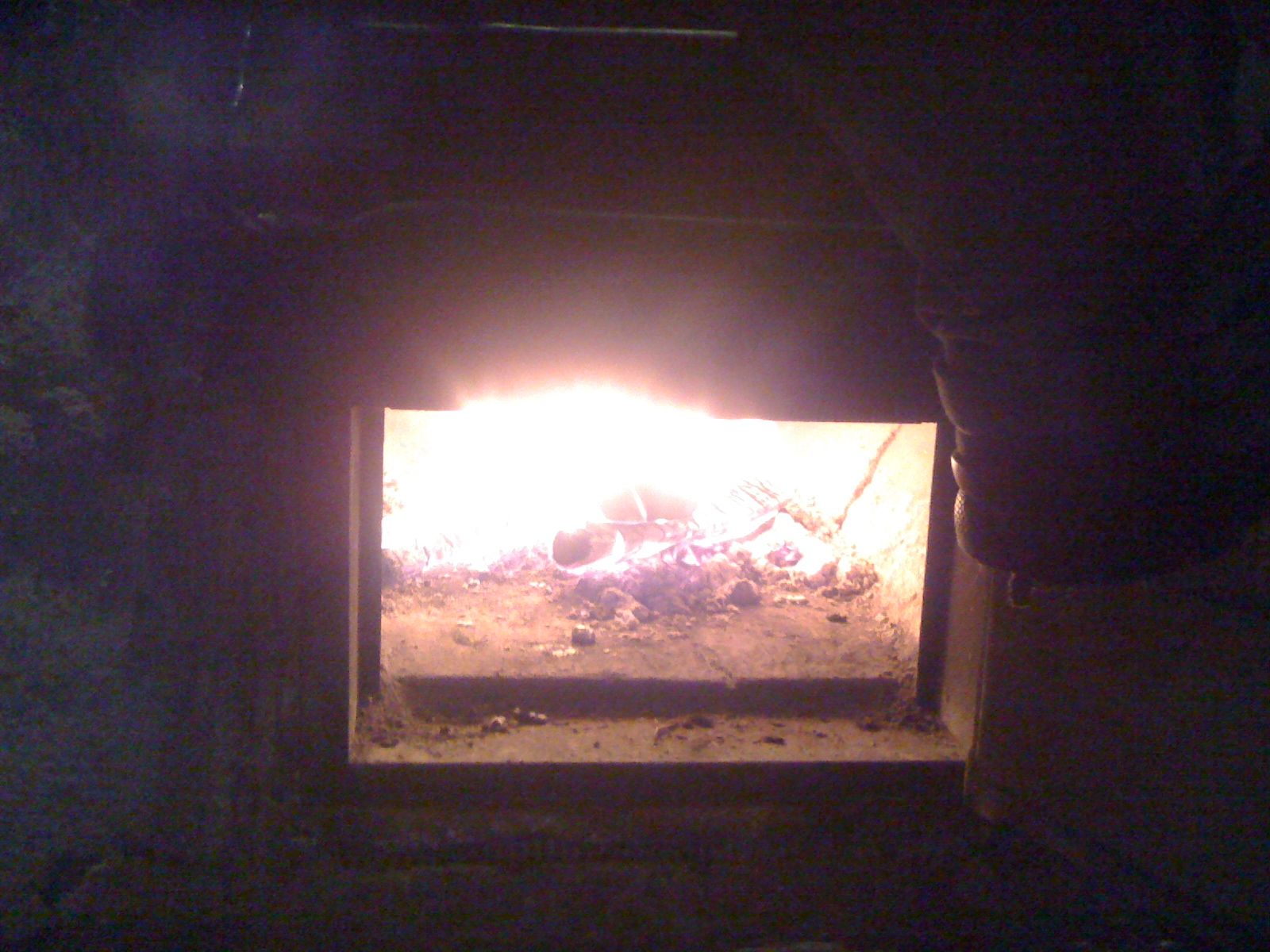
– they are cooked in a custom-built wood-burning oven (figure about ten large for each oven)

The oven

Wood-burning

– each oven has three separate compartments (coolest at the top, hottest at the bottom)
– each compartment has room for two trays (upper and lower level)

Levels

– the trays are cooked from top to bottom
– the tray with the uncooked ham-bread-cheese things are placed in the top and they work their way down and they emerge from the lowest (hottest oven compartment) to be served to the customers
– each tray spends about eight minutes in each compartment (four upper and four lower)
– in the upper position the tops are cooked
– in the lower level the bottoms
– when the tray is moved between levels it is rotated one hundred and eighty degrees – this is to ensure a uniform cooking
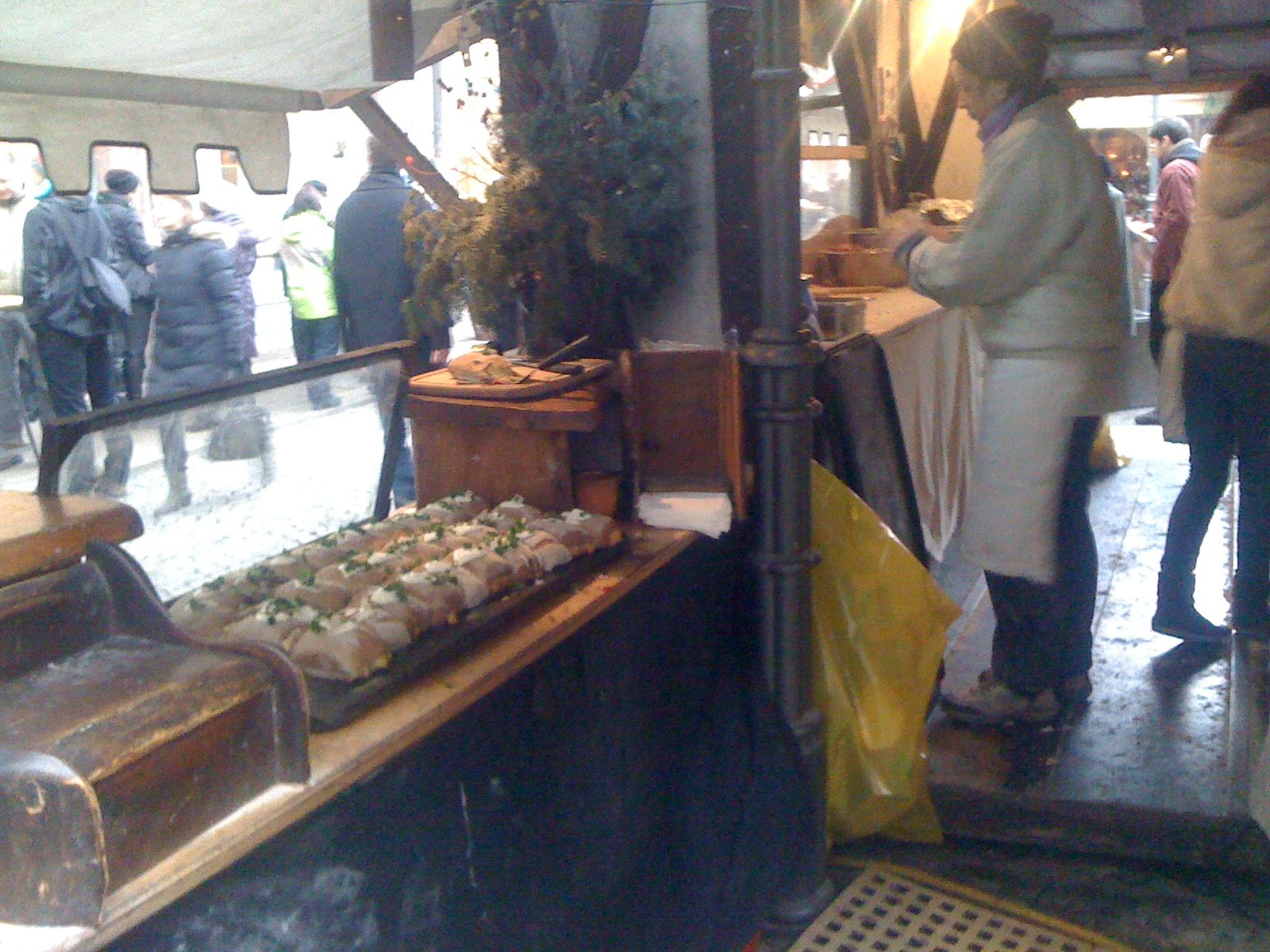
– before being devoured by the customers each ham-bread-cheese thing is adorned with a dollop of sour cream and sprinkled with chives
– by having chambers with different temperature they must be able to cook them faster or something. Does anyone out there know how long it takes to bake bread in a normal oven?

Check it!

– they open at eleven AM
– the close at nine PM
– they only accept cash
– they only sell one product – no drinks, no crepes, no nothing
– there are three ovens
– the eight employees work thirteen hour shifts (from open to close)
– the employer supplies the costumes
– these kids are paid about seven euros per hour
– it cost about ten grand to host the booth for four weeks in the market
– it takes about sixty minutes to assemble and cook one tray
– because these ham-bread-cheese things are only available at the Christmas and Easter markets, there’s a sense of urgency and occasion. If one was able to buy them all year round there would be way less demand
– everyone knows that sandwiches that are made with fresh-baked bread are really delicious but with these things you can see that it came out of the oven not three minutes earlier. This is hard to resist
– and everything is hot and the bread is cooked just right – not to crispy, not too doughy – just right
– on a busy Saturday these guys go for eleven hours, full on, double rainbow
– and they’re only three euros fifty each

Let’s look a the numbers

Expenses

Item Number Wage Hours Days  Total
Employees 8 7.00 € 13 28 20,384 €
Location rental 10,000 €
Misc 10,000 €
Ingredients 48,510 €
Total 88,894 €

Revenues

Type of Day
Ovens Units per oven per hour Unit Cost Hours per Day
Days per month
Total
Busy 3 180 3.50 € 11 7 145,530 €
Medium 2 180 3.50 € 11 7 97,020 €
Quiet 1 180 3.50 € 11 14 97,020 €
Total 339,570 €

Profit

250,676 €

This dude knows what he’s doing. These are conservative estimates and with a cash business he can probably skim without the man finding out.

I also like that it’s not trivial for someone to copy him. There are dozens of Gluhwein and Wurst and crepe vendors – because they’re relatively easy to set up. But this guy’s enterprise is expensive in money (initial investment in hardware is about a hundred grand I bet) and also time (it takes a while to perfect the whole process and to make a good product that everyone wants). On a busy Saturday he’s got one guy running two ovens with three compartments (two levels each) that’s twelve trays with thirty things each. At three fiddy a pop you’re looking at over twelve hundred euros of merchandise (retail value). He’s also got to stoke the fire and back up the other oven. It’s not rocket science but you need a dependable system or it will fall apart fast.

I watched these guys for an hour on a Thursday afternoon and it would take between five and ten minutes to sell one tray. The guy working the oven told me on a busy Saturday they are full on – it goes non-stop for eleven hours.

Just awesome.

Day 85 of 96 – A Farewell

16 Dec

I got to meet Christopher Hitchens once and recalling the encounter always makes me smile.

In September 2007 I attended the Atheist Alliance International conference in Washington DC. On the first night I managed to talk to Hitch for a bit. I had wanted to share with him an amusing anecdote that involved one of his books.

The previous week I had been reading his biography of Thomas Paine on the bus on the way to work. There was a passage that quoted the ancient Greek poet Archilochus “the fox knows many things, but the hedgehog knows one big thing”. Well that very morning, when I got to work and sat down at my desk, I looked out the window and ten feet in front of me there was a fox fighting a groundhog. I’d never even seen a fox in the wild before let alone one fighting another animal. Having read the quote from Hitch’s book just forty minutes earlier made the whole situation even more surreal.

I was expecting a brief discussion about the meaning of the quote but after telling him the story Hitch simply exclaimed, “My God man! Where do you work?” A second later he was called to the podium to speak. We didn’t get to finish the conversation and even today I sometimes find myself reflecting on the meaning of the metaphor. Incidentally, the groundhog won the fight (or more accurately – didn’t lose).

He wasn’t always right, but I always learned something from reading his stuff. I will miss Christopher Hitchens.

Day 84 of 96 – Her boyfriend was also a violist.

16 Dec

This is my first non-Berlin visit into the former DDR. I have one day left on my rail pass so I thought I would use it to check out the “east”. I’m pretty sure Leipzig is going to be like Berlin – I’ve heard it’s got a similar vibe. But I’ve only got a few hours and most of these are going to be spent at the various Weihnachtsmarkts looking at all the neat things. Still, I think a few hours is enough time to claim I’ve visited the city.

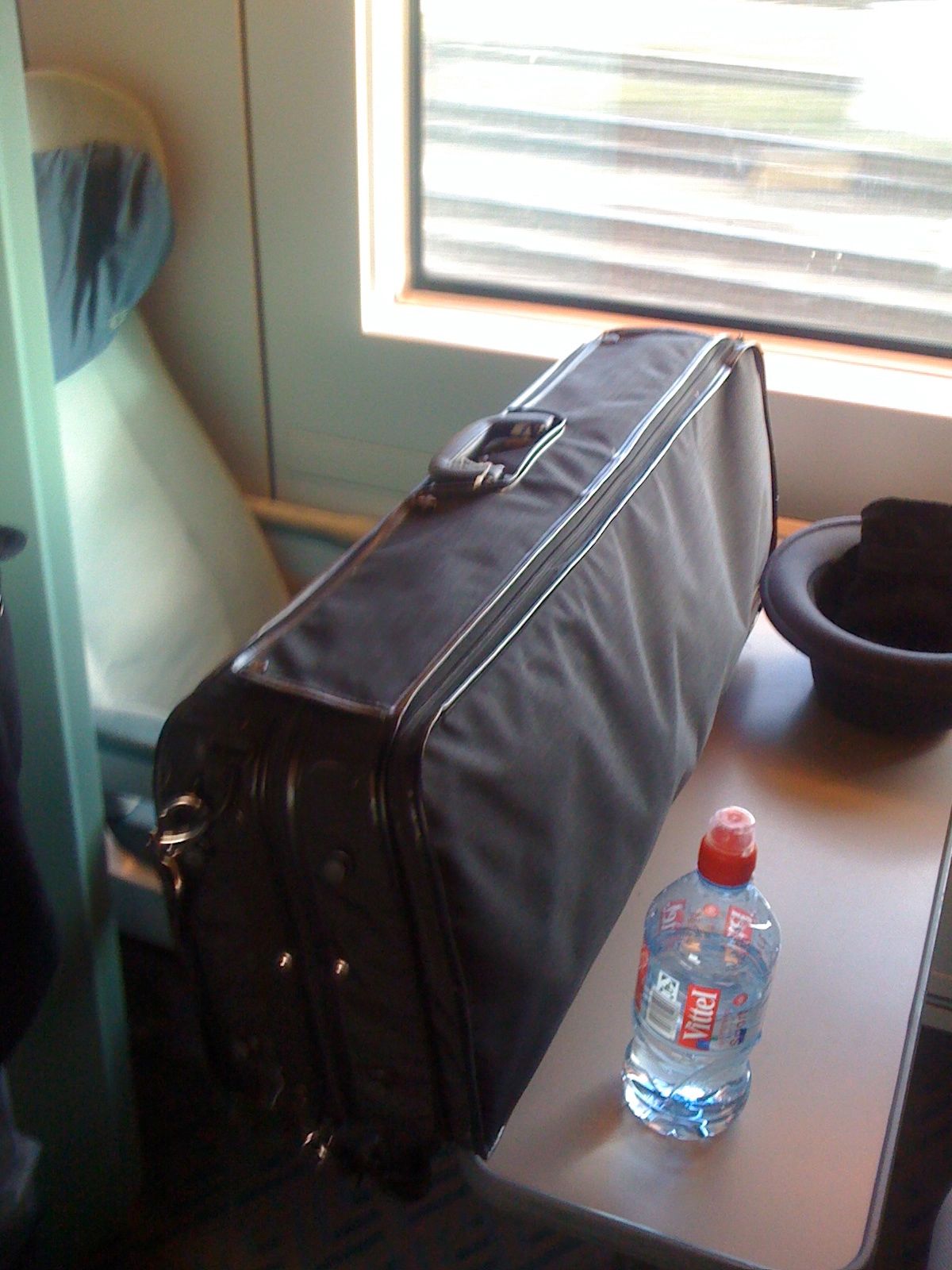
So I arrive just after twelve. On the train sitting next to me is a musician. He was impressed that I was able to correctly guess his position in the orchestra from only his case. I told him that my musician girlfriend makes fun of violas all the time and he laughs. He tells me that the violists are considered to be the dumb blonds of the orchestra. I caution him to not say things he can’t take back. Also, the woman sitting across from us is blond and she would probably find it offensive to be compared to a violist. Maybe she doesn’t understand English cause she just keeps reading her newspaper without looking up.

How did the violist hurt her belly button?

Our discussion drifts to world politics (of course). Guy (pronounced “guy”) is from Israel. He hopes that someone can come up with a clever solution to the problems with Iran. I’m with him on that.

I love meeting people from different parts of the world – especially Israel. Fascinating country. I think their requirement for mandatory military service is an excellent idea. I’m not too keen not the military part but I think each country should have some sort of service requirement for each of its citizens.

You too ladies! This is not just for the guys 🙂

This way everyone can have something to talk about at parties.

Party goer: What did you do for your service?

Me: Oh, I stayed in Ottawa and ran the Zamboni in one of the city parks.

Party goer: Is a “Zamboni” what I think it is?

Me: Yes. Yes it is.

Party talk aside, I think Canada could benefit from some sort of common-experience situation for all of our citizens. You see, under my you-have-to-take-a-year-off-and-do-something-for-your-country system everyone would have to serve. Youth would do theirs around the age of eighteen (after high school). New Canadians would be required to do their year before they get their citizenship. There would be a wide range of options but all would involve working in a team.

And I’m not kidding about everyone having to do this. That certificate from your doctor doesn’t mean anything to me. We’ll set you up with a video link and you’re going to read Harry Potter to orphans and old folks in five and a half timezones every day before bedtime.

Canada has a half timezone.

And I would mix up the teams – you’re not allowed to work with your friends (we’ll check Facebook). One of the goals of this exercise is to put you in contact with people you would normally not associate with. One of the theoretical requirements of a functioning democracy is an informed public, yet many of us don’t know a lot about the different types of people in our own country. It’s normal to hang around with people that have the same interests and socioeconomic status – and that’s cool. But many of the polices our politicians promote during election season have the greatest impact on people who are not us. It would be useful if everyone was able to put a hu-mon face to the things our government is going to do.

This is all related to my main issue with the Charter of Rights and Freedoms. It’s mostly good except I think there should be a section on Responsibilities. If you want to enjoy the wonderfulness that is Canada, you have to chip in your buck-o-five.

You know what, this is all really complicated. It’s probably best if you go watch Starship Troopers.

Day 83 of 96 – More visitors

15 Dec

So I’m having some more visitors this weekend. This means I have to clean my apartment. Sometimes back in Ottawa I’ll host a party or something to force me to clean the house. It usually works. My friends that are visiting this weekend have let me stay at their place a number of times when I’ve visited Mannheim. I’m happy that I’ll get to return their hospitality.

And do we have a fun weekend planned! On Saturday we’re going to meet up with some other friends for breakfast/lunch. Then it’s off to a museum in the afternoon. And in the evening, this is the best part. We’re going to play Puerto Rico!

For those of you who are not aware (which I assume is all of you) board games have changed since the days of Risk, Checkers, Gallipolopoly, and The Game of Lent. All of these games used dice, which inserted a random component that could greatly influence the outcome. Or they had a static board which resulted in repetitive play. New board games have gotten way more interesting because it’s all about strategy.

Take Puerto Rico for example.

A round has as many phases as there are player in the game. During each “round” a player selects one of the following roles:

  • The Trader (trader phase – selling goods)
  • The Craftsman (craftsman phase – production of goods)
  • The Builder (builder phase – build buildings)
  • The Mayor (mayor phase – arrival of new colonists)
  • The Settler (settler phase – place a new plantation on the island)
  • The Captain (captain phase – shipping of goods)
  • The Prospectors (do nothing)

To ensure an equal distribution of the different phases, if a role is not selected, some currency is placed on it to make it more attractive during the next round. If this was a dice-based game you could have ten rounds where no one is the trader and this could really make the game suck.

Another thing that is great is how the games ends:

  • There are no more colonists or
  • All the victory points are used up or
  • One of the player’s islands has no more space to build buildings.

The point of this is that the game does not end with someone winning. The game ends after some resource is depleted, and *then* you find out who won. This is huge departure from all the games of your youth. One of the things that makes Risk boring is that by the end it’s usually just one large army hacking away at a smaller one. It takes forever to play, it’s obvious who’s won, and the other players have nothing to do but talk about the weather for the last forty minutes.

Puerto Rico is truly a fantastic game.

A game of Puerto Rico

Day 82 of 96 – The Soccer Part 3: See you in hell, dinner plate.

11 Dec

So here’s the final part of my soccer rant. Somethings are good, some are bad, but all are listed below.

Good – relegation / promotion – the lowest-ranking teams in the various soccer leagues get demoted to the second division at the end of the season. This makes end-of-season games actually interesting because there’s something at stake.

Good – Once-per week league games – look no further than the success the NFL has achieved using this same format. Dedicating an entire day of the week to play the majority of your games makes an event of that day. Fans can get into a routine and routines are hard to break.

Good – A reasonable number of games per season – hockey, baseball, and basketball can be entertaining to watch but the games are meaningless because there are too many of them. Even they playoff games are all best-of-seven and if a team is up three games to one, no one ends up watching because the result is almost a forgone conclusion.

Good – Fixed-duration games – this makes television broadcasting very straightforward and it allows you to plan your day with some degree of certainty. As a longtime Simpsons and X-Files watcher, I used to hate when the NFL games would run long, and they always did.

Bad – Lack of a draft – there are essentially about seven soccer teams Milan, Manchester, Madrid, Munich, Barcelona, and two others that have all the money. They win all the time because they have the cash to buy all of the young talent. This is sooo boring. But at the same time it does make it possible for one to cheer for them to lose.

Bad – Lack of a salary cap or any sort of revenue sharing – same as the previous example. I heard once that if any of the governing bodies tries to implement anything sort of finance-limiting playing-field-leveling regulations that the big seven teams would simply break away and form their own league. If that’s true: what a bunch of douche bags.

Good – Inter-league games on weekdays – more soccer at a semi-regular interval is great for the people who love the sport. Same goes for the qualifying games for the national teams. North American has nothing like this. I think this might be my favorite thing about soccer.

Good – Single-game playoffs – in hockey, baseball, and basketball, game seven is the most exciting thing possible. To their credit, soccer has this all the time. Single-game elimination is just awesome.

Bad – The cheating and the unwillingness / inability to get rid of the cheating – this is self-explanatory. Shameful.

Bad – The lack of video replay – what is this? The time of Charlemagne?

Bad – Soccer has but one ref and two linesmen – NFL football with a smaller field has seven total officiators. And video replay.

Bad – The pace of the game – players can kick the ball out of bounds at any point with no penalty. It slows the game down.

Bad – The inequality between diving and actually trying to score – the penalty for diving is almost nothing, but if the player dives “successfully” he has a much higher chance of scoring than if he’d played through. Cheating is rewarded.

Good – the behavior of the fans – they bring the energy level up and make the whole soccer-in-the-stadium experience even better.

Bad – the behavior of the fans – the hooliganism that surrounds many soccer games should embarrass anyone who associates with the sport.

Bad – the hooliganism – it doesn’t seem to embarrass anyone.

Good – the cost of the tickets – they are reasonable.

Good – anyone can play soccer – it’s cheap so that poor people can play it. Hockey is crazy expensive. Also regular-sized people:  you don’t have to be a genetic freak (like in football or basketball) to be a superstar.

Good – they play outside – helps keep the cost down for this stadiums (roofs are expensive). And the fresh air is good for everyone.

Good – Giggs getting a yellow card in the box – he deserved it this time.

Bad – I’m sure that there are some things I’ve forgotten – oh well. Now let me never write about soccer ever again.

Is there such a thing as soccer cards?

Day 81 of 96 – Jigsaw Puzzle Time (liveblog!)

8 Dec

****Scroll down for the latest updates****

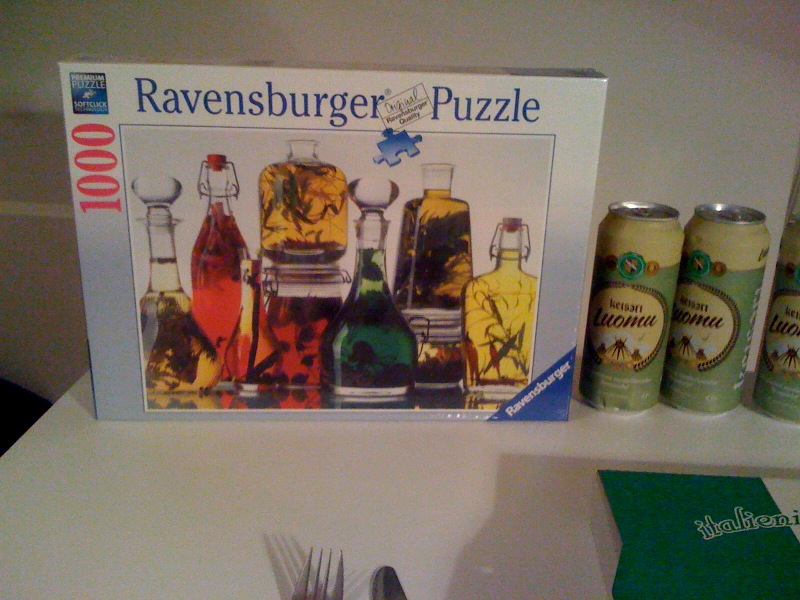
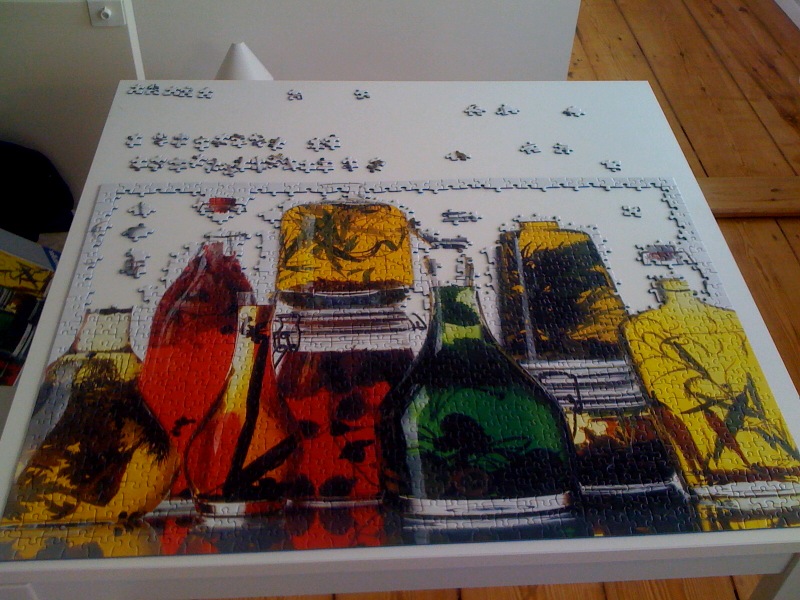
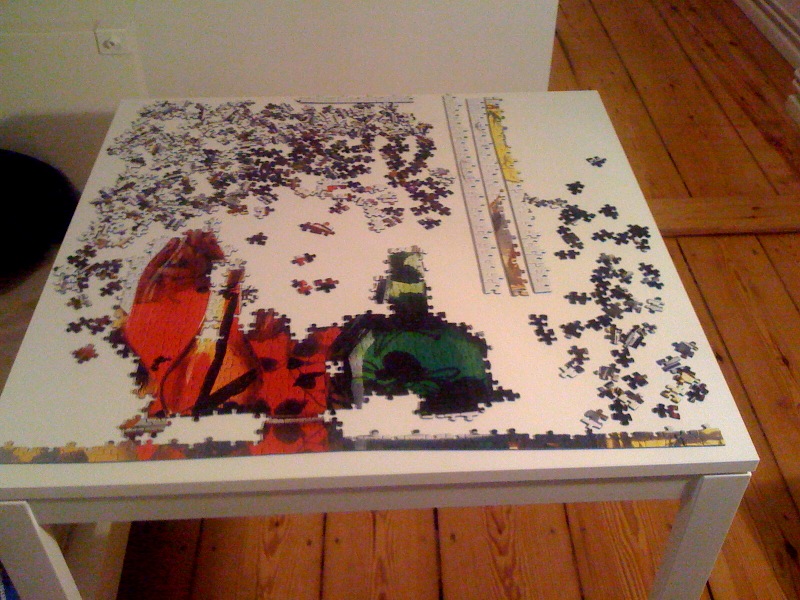
19:15 – Hello everyone, I’m going to attempt to assemble a 1000-piece jigsaw puzzle tonight.

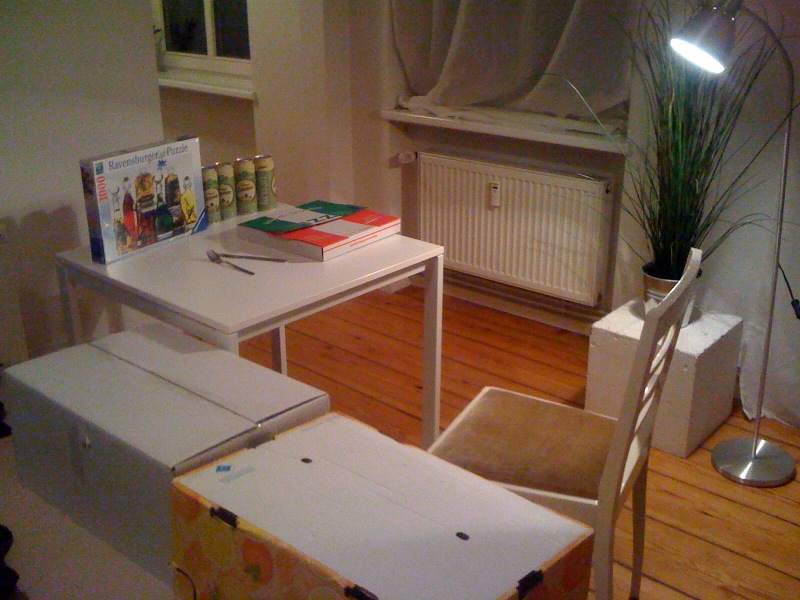
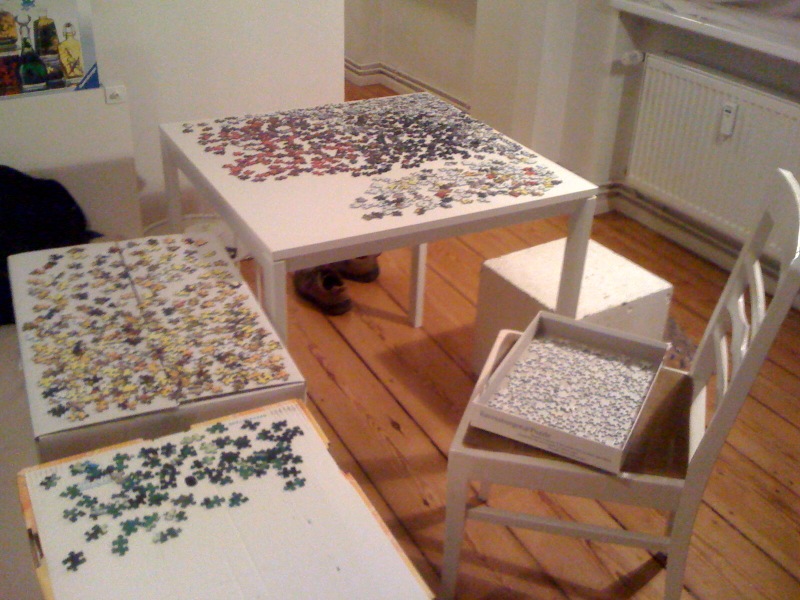
I’ve moved the table into the bedroom area and set up two make-shift surfaces (boxes) to put some of the pieces on (for sorting mostly).

My fuel is 4 beers from Finland, one doner pizza, and a good night’s sleep (from yesterday). I’m going to try and live blog the whole thing. I have no idea how long it is going to take. You can place your bets in the comments.

The set up.

The Puzzle

Please check back for updates.

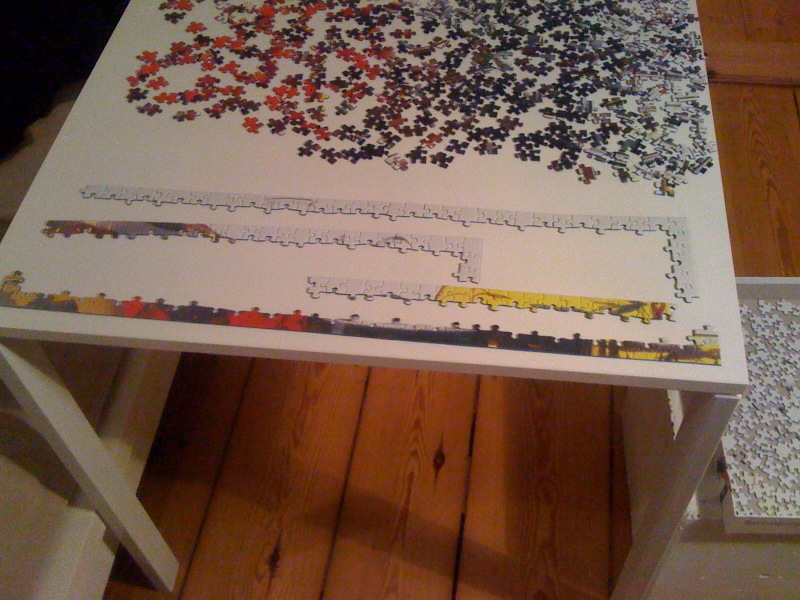
19:20 – sorting by color and type (edge)

19:50 – got all four corner pieces. I’m halfway done.

20:15 – got the radio working http://www.berliner-rundfunk.de/ – Smalltown Boy by Bronskie Beat

20:30 – sorted, seven groups – green, yellow, red, white, edge, dark, half-white – No Milk Today by Herman’s Hermits

Sorted

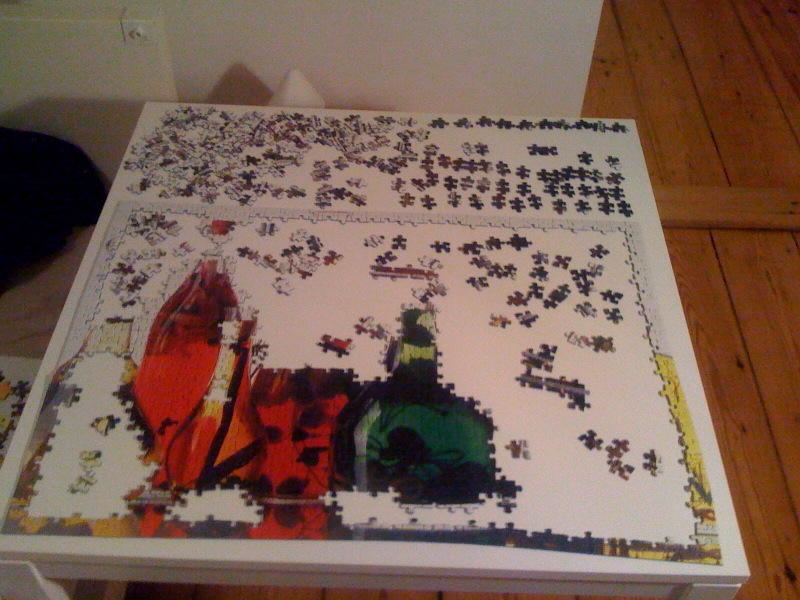
21:05 – edge complete – You’re so Vain by Carley Simon

Keeps me sharp, on the edge, where I gotta be.

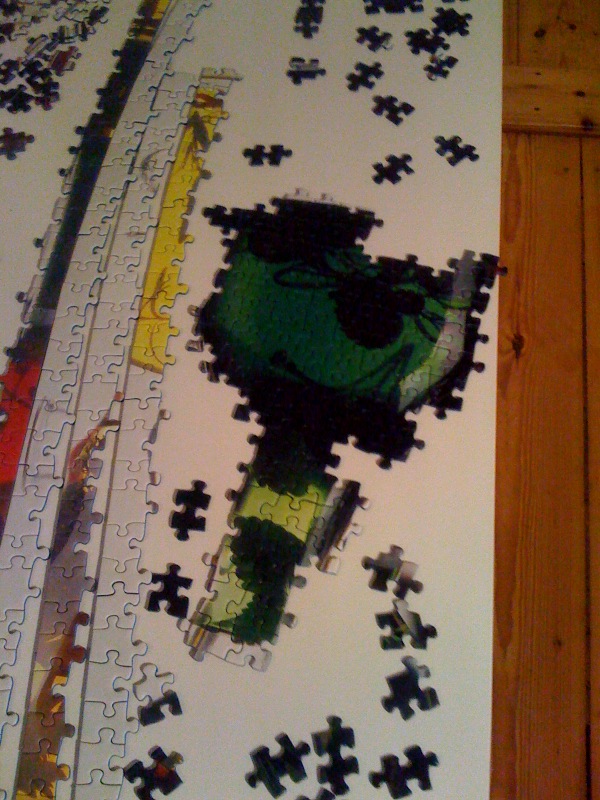
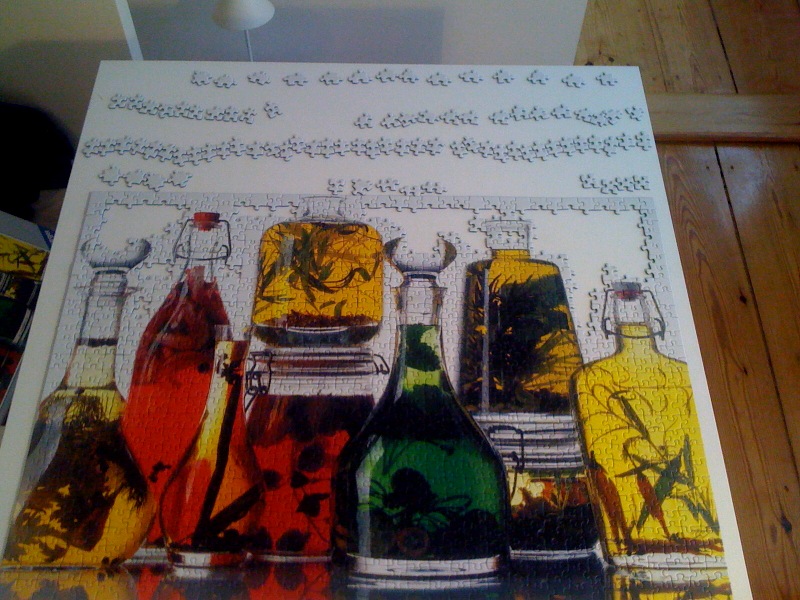
22:10 – Green bottle complete, starting on the red – In the Summertime by Mungo Jerry

Time for a beer

23:15 – problem is there’s two red jars – Gordon Lighttfoot – If you Could Read my Mind

00:38 – red jars done – One of Us by ABBA (Never heard  this one before)

Having vision problems.

00:45 – going to start the yellow now – I want to Know What Love is by Auslander

Time for sleep

01:33 – sleep

08:33 – back to work – Berlin RundFunk Morning Zoo Crew

08:52 – non-yellow pieces sorted for color and shape – Heart of Gold by Neil Young (CanCon) after two SwedCon songs (ABBA and Roxette)

Sorted!

13:10 – go eat or finish the puzzle? – Lady in Black by Uriha Heap (dare I ask?)

Of course I'm going to finish it.

14:11 – only the white pieces left – You Spin me Around by Dead or Alive

All the remaining pieces are the same colour. FML

14:40 – 69 pieces left – Killing me Softly by Roberta Flack (how appropriate)

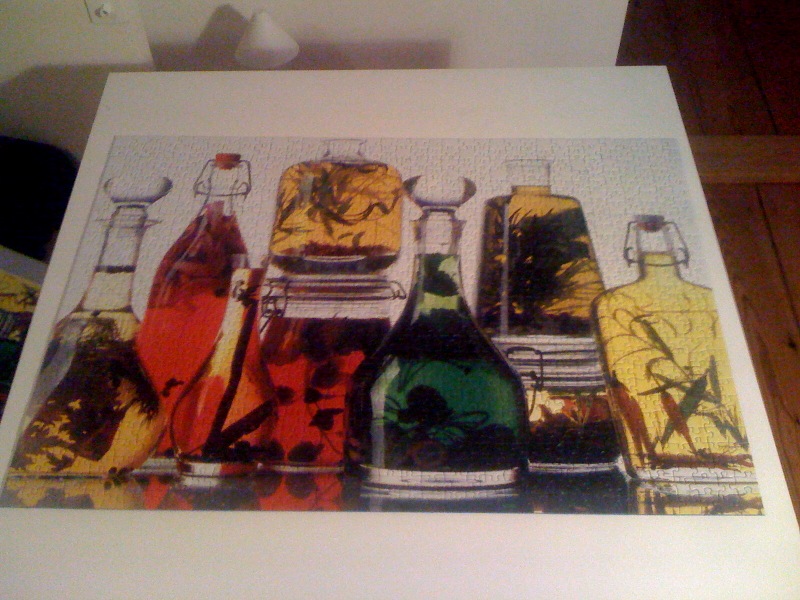
16:14 – all done – Dien ist mein Ganzes Herz by Heinz Rudolf Kunze

Finally


Day 80 of 98 – The Soccer Part 2c: Vote Quimby!

8 Dec

Continuing on, this post will be about the general behavior of soccer fans.

So the previous post contains one possible explanation for the violence, but what about all that craziness that goes on during the regular season soccer games. What’s up with that?

I think there are a number of factors. For starters, the previously-mentioned regional rivalries help get the fans worked up. It probably carries over to when a team is not playing a close rival. No doubt about that.

In addition the game is slow and you are unlikely to miss anything if you turn your head for 30 seconds. If something exciting did happen the rest of the crowd would let you know well in advance of the event itself. Idle hand are the Devil’s something. Or so it says in the bible. I think the fans can act all crazy-like because the likelihood of them missing something important is incredibly low. Many goals are scored on penalty or corner kicks and these take a long time to set up. Everyone is watching.

Baseball and football have breaks between every play that are about twenty to sixty seconds long. These pauses are effectively timeouts – no one is going to score. You would think this would be the death of the sport, but once the play starts again, there is decent chance of something interesting happening. To put it simply, in baseball one can score with the very first pitch. In football it’s possible to score a touchdown on the very first play – and this does happen. In hockey, the fastest goal from a center-ice face-off is about four seconds.

You can look away to try and light that firecracker but you might miss something. Or not.

Meanwhile in soccer, many games go the entire match without a goal. There have been ninety-six Champions League matches played this fall and eight have been scoreless draws. That’s a greater than eight percent chance of not seeing a single goal during a match.

Now I’m *not* saying that soccer is objectively boring. If your team needs a tie to advance, a 0-0 final score is awesome. Every shot on goal could be the end of your season – this is drama. And from point number one: if you grew up with soccer you will find it interesting and exciting.

What I’m trying to establish is that there are very few moments in a soccer game where someone has an actual chance of scoring. This means that the fans have had to invent novel ways of keeping themselves entertained. This is where the marching bands, the firecrackers, the alcohol, the flags, the singing, and the taunting of the opposing team’s fans comes in.

And all of this make the in-stadium soccer experience a lot of fun. If you get a chance you should really try and see a game.

There are some other factors at play here too:

  • It’s winter, the fans are outside, and they have to keep warm – so they jump around
  • They are also standing (the most boisterous ones anyway) so they need to keep moving to stay comfortable
  • The games are played at the same time every week – it becomes ritual, and therefor its importance gets elevated (plus it’s just easier to schedule). The NFL is like this too (except they play on Sundays) and they have the craziest tailgate parities/fans. The NHL, MLB, and NBA play their games on all days of the week so it’s impossible for it to become fully ritualized.
  • There are fewer games so they become more important – in baseball each team has a hundred and sixty-two games in the regular season. Hockey and basketball each have eighty-two; NFL football sixteen and CFL eighteen.
  • The fixed duration of the matches might mix in there too. If there was even a ten percent chance that the games could run four hours, I bet a lot of fans would be turned off. At a minimum they would want to be able to sit down.

Jebus. It’s like I’m back in school writing a report. To summarize:

Soccer violence – cultural and regional historical rivalries that are largely absent in North America.

Soccer fans acting all crazy during regular season games – low likelihood of scoring coupled with the previously-mentioned preclusion for soccer violence mixed with the ritualized nature of the once-per-week contests and the low number of games per year.

This all may sound a bit hokey to some of you, but I for one, like establishing sweeping, all-encompassing “facts” that are based on a small number of personal experiences.

Day 79 of 98 – The Soccer Part 2b: There’s plenty of exits for everyone

8 Dec

Continuing the previous post, this one will be about the behavior of soccer fans.

3. The fervor of some soccer fans at almost every match reaches an intensity that in North American we save mostly for the playoffs. Combined with point number one (dullness), this only increases our bewilderment.

On its own, sports fans acting crazy and doing stupid, violent things does not require any special explanation. It’s a simply combination of human males aged fifteen to twenty five, passion, excitement, high stakes, human nature (competitiveness, in-group/out-group mentality), and alcohol. Everyone knows this.

The problem is that to your average North American, most soccer games lack excitement and high stakes. The majority of regular season games are, well, regular (i.e. nothing special). So why all the craziness? And why are there real security concerns at regular season soccer games? The answer is a bit complex.

I’ve been hanging around Europeans for a while and I hope to be able to shed some light on this subject for my fellow Canadians and both my American readers. Maybe the Euros reading this might be able to learn something too while we’re at it.

First up: the violence. In Europe, local rivalries are real things, not made up like in North America. Canadians think there’s a rivalry between the US and Canada. There isn’t. If there are any scientists out there, here’s an experiment you can try. It involves alcohol, it’ll be fun!

Order a Budweiser at a bar in Toronto and see what happens. Then, drive to Buffalo and order a Molson beer. Next, fly to Dusseldorf, go to a pub and order a Kolsh. Be sure to note the reaction of the people around you. If you’re still able, try the same thing in a Cologne pub, but this time order an Alt Bier.

Note: Visa gold card travel insurance is only good for trips that are less than 15 days in duration.

You should notice a much higher level of hostility in Cologne/Dusseldorf than in Toronto/Buffalo. But this is just a simple thing, ordering a beer. What is going on?

See, in North America we have lots of space and we’re relatively young compared to Europe. We are roughly half the population but twice their size (I’m not including Mexico). For 500 years the Americans of European dissent did not face any serious eternal threats to their existence. The natives did not have any of the guns, germs, or steel which enabled the Europeans to take over the continent with relative ease. The only major war I can remember from my eighth grade history class was the war of 1812 and this only lasted a couple of years (the war, not grade eight).

If you’ve got lots of space, no worries about being invaded, and enough time (hundreds of years), you’re going to develop a culture that is more or less, how do I say, not so concerned with your neighbors. There’s less competition for resources because of all the free space and it just might be easier to just move somewhere else than to go to war over some patch of land.

I have no idea if any of this is true. But one thing I do know is that for much of the history of Europe, things were a lot different than in North America. For centuries in Europe you had (have?) many different countries and cultures that were always warring with each other, competing for resources, and worrying about being invaded.

At the soccer match the other day, Julia was telling me that the Bremen fans are really well behaved and that they don’t fight with the opposing team’s supports. What a strange statement. Why would anyone want to fight with anyone? Especially over soccer.

But then she added a qualifier “unless they’re playing Hamburg”. Re: qualifier – no pun intended.
Who are these Hamburgers you speak of, and what makes them so special?

Well it all comes back to geography. Bremen and Hamburg are two of the three German city-states – part of the Hanseatic League. They are located about one hundred kilometers apart and they probably have some huge rivalry that goes back hundreds of years. Luckily for everyone, all that remains of this once great conflict are twice-yearly soccer contests (one home, one away), that are “fought” by twenty-two men, none of whom are actually from either city.

Because of their close proximity the visiting team in Bremen vs. Hamburg matches usually has a significant number of supporters (maybe a few thousand?) that will make the journey into enemy territory. Compare this with the Stuttgarters from about six hundred kilometers south of Bremen. They had only about 500 fans crammed into the visitor’s cheering section way at the end of the stadium. The Bremeners didn’t really care about them.
And why would they? Their numbers are too small to be a physical threat and there’s no real rivalry between the two teams. They only play against each other twice per season and there’s no playoffs in Bundesliga soccer. I could imagine a rivalry developing between these two distant cities after a hard-fought playoff where one team was victorious after a questionable decision by the officiator (soccer anyone?). But with so few games being played between them it’s difficult for anyone to carry a grudge for longer than a week in today’s ADD-addled society.

Even if there was a crazy game at the end of the season where the losing team was relegated to the second division it would be at *least* a year and a half before these teams could play each other again.

My hypothesis is that because of the historical conflicts of the region, there is a higher likelihood of soccer violence if the teams that are playing share a close geographical proximity.

Maybe some teams (or countries) have fans that are crazy and they end up fighting all the time. Or maybe there are some teams that are universally reviled – Bayern Munich might fall into this category – more on them later. These are both possibilities but I think that there’s much truth to what I’m claiming.

Now in North America there is violence between the supports of rival teams but it seems to me that it’s not on the same level as in soccer. I’m not aware of any NFL, CFL, NHL, MLB, NBA, or WNBA teams that segregate the visiting team’s fans. The large police presence at the crucial post-season games is to prevent the fans from rioting but this sort of thing only happens late in the playoffs.

Back in Ottawa in 2005 there was this German student who was there on exchange. He was a huge sports fan. I found it fascinating to watch him throw all his support behind the Senators: face painted, jersey wearing, cheering loudly, an actual attempt to understand the rules. I was all like, “Relax guy, it’s just a pre-season game. These are even more worthless than the ones in the regular season.” (they play almost ninety in total). But he was all like, “I’m not your guy, buddy. I’m from Ottawa now, and this is my team”.

He didn’t read up on all the different teams or try to find a German-born players and cheer for those teams. It was a pretty straightforward process for him.