Day 5 of 4 – NYC 2024, Epilogue, Pt. 2

11 Apr

Gilroy does something else in his stories that I wish were applied to every character in every movie. And that is: every character in the story (not just the main one) is the protagonist of their own story.

In the real world everyone is their own main character. There’s no one who is waiting around to sell you (and only you) a hotdog. There’s a guy whose job (or second job) has him standing outside in all kinds of weather interacting with all kinds of different people, selling them hot links. That person should act on screen like that is their day-to-day.

I love this scene from Michael Clayton (2007). Gilroy gives a masterclass in how to deliver information to the audience. It’s short, 30 seconds – have a watch.

The entire purpose of this scene is to tell the audience three things.

  1. Michael has been trying to get a meeting (not yet clear what for) with his boss
  2. His firm might be merging with another firm
  3. This merger could cost him his job

Bad exposition happens when a character simply says the thing the audience needs to know. It’s not how the real world works – the thing you need does not just simply appear in front of you. There’s ALWAYS a cost. Also it’s boring when there’s no struggle.

The battle in this scene is that Pam clearly wants to know if her job is safe. She has to figure out how to get that information from her boss who is unlikely to confirm it for her. This is how a real person in the real world would behave. And Sharon Washington’s performance is perfect. That look she gives Michael as the scene ends. Perfection.

As I was researching this I was reminded she also had a part in another one of this blog’s favourites: The Long Kiss Goodnight (1996).

The scene’s purpose is character background for Mitch plus a setup for a future payoff. In her 20 seconds of screen time Washington has to convince us that she was once married to Mitch and what that was like. Again, she nails it.

And to complete the trifecta, we have to talk about her part in this blog’s namesake.

In any big-budget action movie, a scene like this one can get drowned out in all the explosions and car chases. Here we have an incredible forty-second tracking shot (an eternity in modern movies) that introduces the five police officer characters where the (narrative) climax of the shot is delivered by Washington.

What a great performance. Notice how her breathing is that of someone who’s done no physical exertion but whose heart rate is up. Exactly like you would expect of someone who just spoke on the phone with a psychopath who detonated a bomb in a densely populated city at rush hour. I believe it’s small things like this – things you might not consciously pick up on – that build great, rewatchable movie experiences.
Day 5 of 4 – NYC 2024, Epilogue, Pt. 1

10 Apr

I want to close this essay with some thoughts on the screenplay.

In his writing, Tony Gilroy tries to make every scene a battle. Some of the battles are small and provide background (Selena’s interactions with her boss) while some are large and move the whole story forward (the bank scene). But every single character interaction is a battle. This makes for compelling storytelling.

The battles in Dolores Claiborne (1995) are “courtroom” (using words) save one or two that are “boxing ring” (a physical altercation). When it comes to showing the impact on screen (because film is a visual medium) one would think boxing ring would be the easier of the two.

This is (obviously) a false dichotomy. There are many stories that do one or the other or both very well. But I’ve noticed a couple of problems with the general execution of both kinds of battles that sometimes show up in movies and their sequels.

First, the audience will naturally understand the impact of words (statements/questions/answers/truth/lies) because communicating via words (spoken or typed) is our existence. So provided the storytelling is clear, the audience intuitively understands who is winning a courtroom-style battle. The same is not true for the boxing ring.

Because most people have never been (for example) knocked out in a fistfight, the average movie-goer’s understanding of what it’s like to take an unblocked, full-power shot to the head by professional heavyweight boxer in the prime of his career is usually based on the final ten minutes of a random Rocky movie.*

This on its own is not a problem. The idea that Rocky can take beating and not go down, it really works in the Rocky movies. There are two reasons. First, they amp up the intensity in the sequels by simply making Rocky older. They don’t have to give his opponents special powers, robot arms and such.

Second, the insane, hyper-unrealistic fight only happens once, at the end of the story. Too many modern action movies will have several of these kinds of fights throughout the movie. In a protracted contest between two opponents (without taking special care to plan/metre out the hits), physical battles can lose impact as the story progresses when they move from plausible/fantastical up into the cartoonosphere where the characters routinely survive things like asteroid impacts or swallowing lit sticks of dynamite. Where’s the tension if our hero is impervious to atomic weapons?

The same thing happens in movie sequels where the character(s) in the first movie are everyday Joes and Julies but by the fourth movie they’re basically superheroes. Sometimes it works (F&F movies) and sometimes it does not (Die Hard).

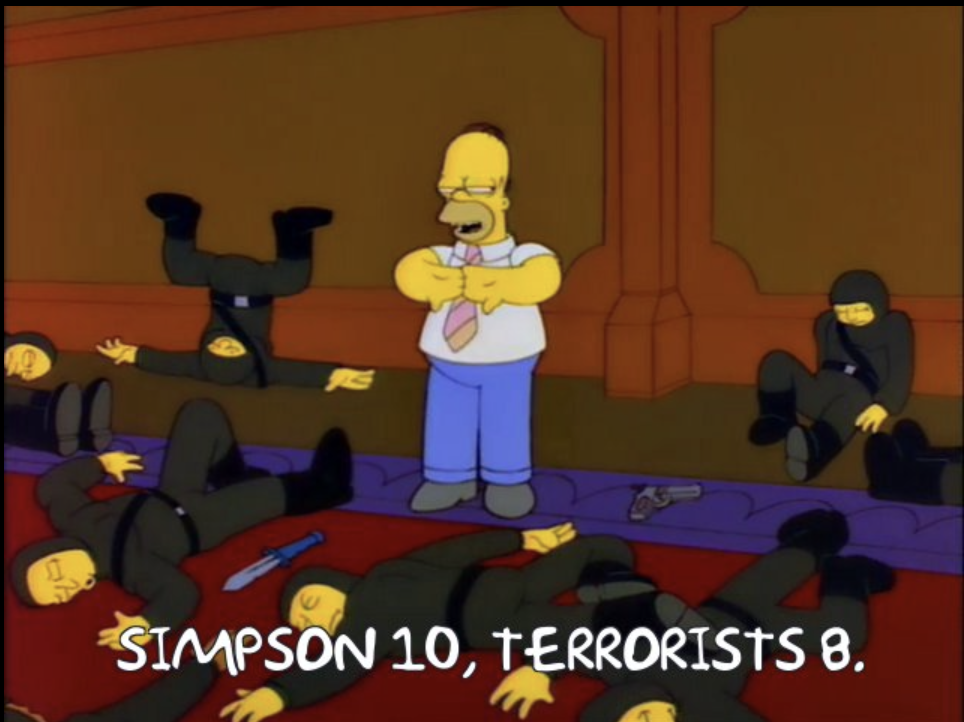
Back to the courtroom battles, I feel they’re best when there’s a healthy back and forth and the final score is 10-8 like in A Few Good Men (1992). I was going to use the famous “do you like apples” scene from Good Will Hunting (1997) to give an example where the final score was 10-0 (the antagonist was simply an asshole, he started the fight, took some swings, landed none) but then I watched it on YouTube and was like, “Nope. Perfect. Change nothing.”

What affects courtroom-style conflict is the Jessica Fletcher problem. When the plausible/fantastical part of the story is the inciting incident (a possible murder) it can be challenging to find anywhere to go anywhere in the sequel that does not come off as “what are the chances?” The Hangover Part II (2011) was great but like, come on.

This joke is the actual way you’re supposed to write a battle scene. Simpson 10, Terrorists 0 is boooooooring.

*In reality you would die 100% of the time – your head would literally detach from your body, fly across the room in a perfect parabolic arc, hitting the rim of a garbage can and circling for five seconds before falling in.

Day 4 of 4 – NYC 2024, Pt. 3

8 Apr

I’ve tried to write here about Dolores Claiborne (1995) without including any spoilers. But as we get to the end of this essay, we gotta talk about the end of the film. 

What really sets this film apart from its contemporaries is that while the ending is satisfying, its resolution is one where the two main characters are still broken like they were at the start, only slightly less worse.

A common trope in Hollywood character-driven dramas is to have the main character, usually a man, who is oblivious to the impact of his actions and who leaves a trail of destruction wherever he goes. At the end of the film he’s able to see the error of his ways and change (typically against the backdrop of a large, dramatic event) – like Tootsie (1982) or Flight (2012). Even A Few Good Men (1992).

The change is large and suggested to be permanent. Hooray! Our flawed but likeable protagonist is cured! Everything is good!

In Dolores Claiborne (1995), Selena and Delores are victims of boring old patriarchy. The scene in the bank illustrates this perfectly.
– Structural/economic – Dolores could not open a bank account without her husband co-signing
– Gender norms/social – she (rightly) gets upset but she has to lower her voice to have her complaint even heard by the manager.
– Power Dynamics/Classism – she’s a woman, just one of the poors, at the mercy of whatever the bank manager decides. She has to resort to special pleading to even have a chance.

The forces that keep Selena and Dolores permanently on the back foot are the same ones that enable the aforementioned leading men. So at the end of our story, after making landfall, Hurricane Patriarchy continues inland, never losing power. Our characters survive with small, positive changes and some hope, but they’re still broken and surrounded by destruction.

Image courtesy of God

Day 4 of 4 – NYC 2024, Pt. 2

8 Apr

There were two things that prompted me to write this series. The first is my love for this movie. The second is that it features a total solar eclipse very similar to the one that is about to… what does an eclipse do? Attack? Block? Doesn’t matter. A total solar eclipse is scheduled here for later today and it’s going to continue all the way to Maine (the American state where Dolores Claiborne (1995) is set). So it’s very relevant. And the one non-Maine location in the movie is Manhattan. That ties nicely into the New York part of our trip.

We’re currently driving north on I-81 North and it looks like it’s going to be super cloudy so… who’s up for Iceland 2026!? Like I really have to experience an eclipse now. For some reason it was really low on my list of atmospheric phenomena I want to see. That is no longer the case.

Anyone who’s ever been with me on a long drive has heard my rant about the proliferation of progress bars in movies and why that is bad. The solar eclipse in Dolores Claiborne (1995) is not your typical time pressure device in that there’s no large calamity at time equals zero. It’s an event around which the story focuses and not what the story is about. No one is trying to stop a solar powered runway train.

Image courtesy of NK

Day 4 of 4 – NYC 2024, Pt. 1

8 Apr

One of the most unusual things about Dolores Claiborne (1995) is how it fares taking the Bechedel test (a measure used to evaluate the representation of women in fiction)

The test has three criteria (it’s a very low bar and MANY films do not pass):

  • The work must have at least two named female characters.
  • These characters must engage in a conversation with each other.
  • The conversation must be about something other than a man.

Dolores Claiborne (1995) doesn’t just pass the test, it’s textbook example of a movie that goes all the way in the opposite direction. All of the male characters with speaking roles (not just the named ones) and all their conversations are exclusively about one of the two main characters (Selena or Dolores).

And I find this really refreshing.

I think of it like this: when a filmmaker innovates and everyone is like “that’s really great!” and the innovation becomes commonplace. Like Spielberg in Jaws (1975) not showing the full shark until the final battle. End-of-movie monster reveals are now just the way things are done.

The problem is that “making movies that centre around the lives of women” is not an innovation. It’s just a choice. In an ideal world we would get a healthy number of all kinds of movies. My all-time favourite movie is probably The Hunt for Red October (1990) and in this movie ALL of speaking roles for women are finished before the opening credits are done. A movie like this on its own is not a problem. The problem is that there are lots of Red Octobers and very few Claibornes.

Day 3 of 4 – NYC 2024, Pt. 2

7 Apr

Dolores Claiborne (1995) has as quality that I call “infinite re-watchability”. This is (for me) highly unusual for a movie with such heavy (often depressing) subject matter. The more times I watch a movie I tend to notice things that would NEVER be picked up on the first or even second viewings. These pickups are going to either enhance or distract from the experience.

In Lethal Weapon (1987) Murtaugh and Riggs are both naked in their respective introductory scenes. This was a deliberate choice by the filmmakers and something that for sure registered in my subconscious, but took 30 years and 30 viewings for me to actually notice. Finding hidden treasures like this one is a way of recapturing a small part of the wonder experienced the first time you watched a beloved film. Because during that first time, everything was a surprise.

But it’s also the absence of distractions. This is not to say the giant fake ear in Wrath of Khan (1982) ruins the movie. I can’t unsee it (obviously) but I had to be told it was a giant fake ear because every time I saw it I was reacting to the overt horror of what was happening to Chekov.

For me, watching Dolores Claiborne (1995) there are way more positive pickups (enhancements) than there are negative (distractions). Part of this stems from the time that passes between viewings. I gotta be in a certain mood to watch this one (it’s not exactly a dance around the maypole) so I don’t return to it very often and this distance helps with the pickups (both good and bad).

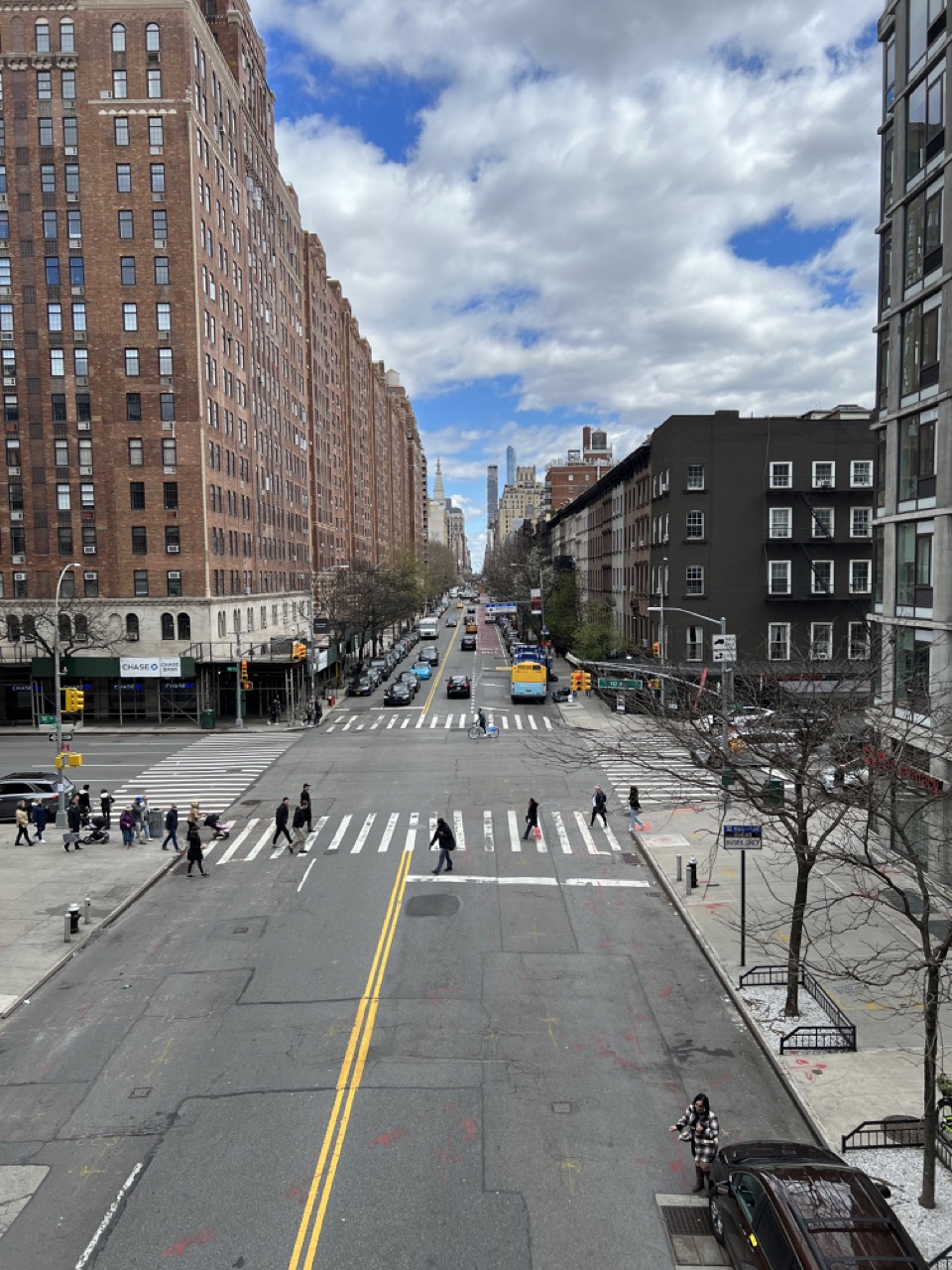
There are no buildings in the middle of the street (a very minor distraction from Independence Day (1995))

Day 3 of 4 – NYC 2024, Pt. 1

7 Apr

I’ve often joked that every film released between 1994 and 2002 is the most beautiful film ever made. Just go watch any random two minutes from The Fast and the Furious (2001) and compare that to the best looking scene of any movie released in the past twenty years (including Fury Road). It’s like night and day.

Modern movies shot digitally are (generally) flat, grey and boring. I don’t know why this is and I don’t care to learn. All I know is that when I watch Witness (released in 1985) I get sad because it reminds me that technology improvements have made things objectively worse.

Dolores Claiborne (1995) was (of course) shot on film and it uses a very simple technique to visually indicate which parts of the story take place in the present (1995) and which are from the past (1975). The recent scenes are grey and drab while the parts from the past vibrant and colourful.

These choices are deliberate. The past is represented as how people often remember it – better than it actually was (while truly being hopeful.) The present is where the characters are dealing with the aftermath of past trauma and the grey, somber colour pallet reflects that.

It’s beautifully shot and the cinematographic choices by the filmmakers are born from helping the storytelling and not from something outside the artistry (like the production budget).

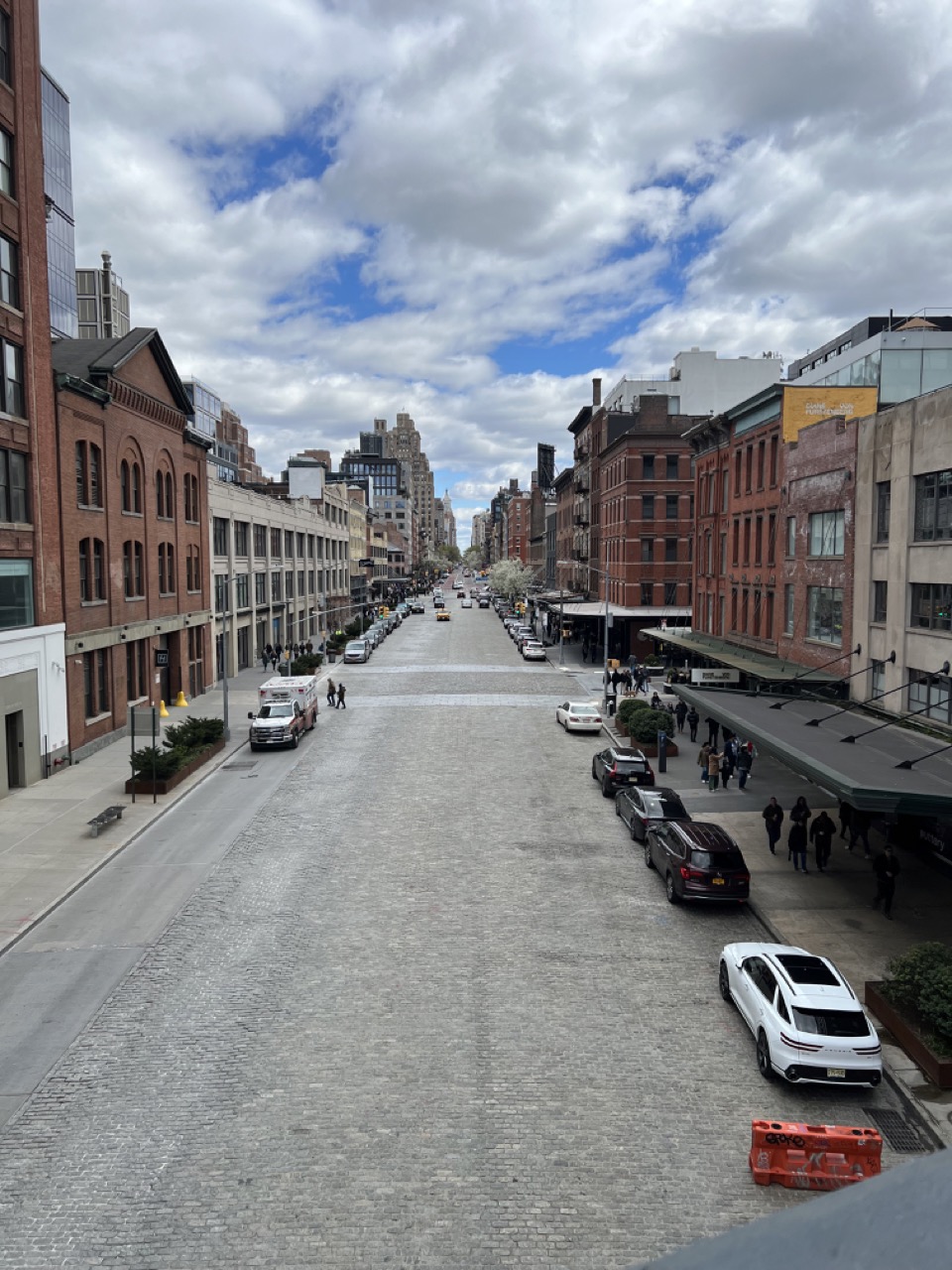
Walking Sky Line is a depressing experience. A graveyard littered with the rusting remains of once beautiful train tracks and stations with no trains anywhere to be seen. Very sad.

Day 2 of 4 – NYC 2024, Pt. 2

6 Apr

While I believe it’s possible to objectively determine if a film is well made, any answer to a question like “is this the best movie of all time?” is clearly a subjective one. In that vein, I’ve often wondered: does Dolores Claiborne (1995) have the strongest cast of all time?

So how would one go about “measuring” something like this? My idea is to take something that is subjective but a general indicator of high quality (number of Oscar nominations/wins), multiply it by another number (screen time) and then divide that number by a third number (film runtime).

I’m not actually going to do this because a) it’s a lot of work and b) Sneakers (1992) exists. It would easily win any variation of this acting Oscar measuring contest.

I’m just saying that Dolores Claiborne (1995) has good actors that all give great performances. Five of them (Kathy Bates, Jennifer Jason Leigh, Christopher Plummer, David Strathairn and John C. Reilly) have been nominated for acting Oscars (with two wins). And if you’re curious, Sneakers (1992) has eight noms (three wins) with David Strathairn appearing in both films.

More NYC

Day 2 of 4 – NYC 2024, Pt. 1

6 Apr

Every single thing about Dolores Claiborne (1995) fascinates me. It’s one of the maybe twenty films that I consider to be perfect (not flawed perfect, but perfect perfect.) It is also very much a (personal) outlier.

It feels out of place on my top, top movie list because it’s the only one that can be found outside the action/adventure, drama, thriller, and science fiction genres. I would say Dolores Claiborne (1995) is a psychological drama with strong horror themes, some thriller elements, and a mystery sub-plot. While I feel one could debate classifying it a horror movie (a genre that is a lot more miss than hit for me) it is very clear that it is not a comedy. There’s not a single moment of levity in the entire runtime.

Of the good (but not popular) movies I love from that era I can usually recall how I got onto a given film. But I cannot for the life of me remember how I ever decided to watch a movie that (at first glance) gives off such strong Stone Angel vibes.

There’s also this weird thing where the screenplay was written by my current (since about five years) favourite filmmaker – Tony Gilroy, but I somehow never really noticed he also penned this outlier movie from 1995 that I love.

No Grammers!

Day 1 of 4 – NYC 2024, Pt. 2

5 Apr

Back in 2020 at the start of the pandemic total lockdown I found myself with a lot of inside time and I used some of that time to compile a comprehensive list of my favourite movies. And what happened was surprising: I ended up with two lists.

There was the big one with over a hundred and then the little one with about twenty. It’s kind of like the invitees to a wedding – one for local ceremony and another for destination. Or the physical books you take with you when you’re downsizing vs the ones you’re allowed to bring with you to a deserted island.

I really enjoy learning about people’s favourite movies. To me it’s like a tiny window into ones soul. We love these movies because of the emotions we feel when watching them. Adventure for some. Romance for others. And so on. They’re all small pieces in the puzzle of you.

And for me the most interesting favourite movies are the ones that don’t appear on anyone else’s list. It’s like, hmmm. Why is this here? Let’s investigate one from my list.

Instagrammers, they’re in all the shots!